In this guide
- Where in the Bahamas should you charter?
- When is the best time to charter in the Bahamas?
- A nine-day route through the Exuma Cays
- Exuma Cays Land and Sea Park: how do moorings, rules and fees work?
- What taxes apply to a yacht charter in the Bahamas?
- Which yacht suits the Bahamas?
- How much does a week’s charter in the Bahamas cost?
- Eleuthera, Harbour Island and the Abacos
- Practical points before you go
- Common mistakes to avoid
- Have Bahamas dates in mind?
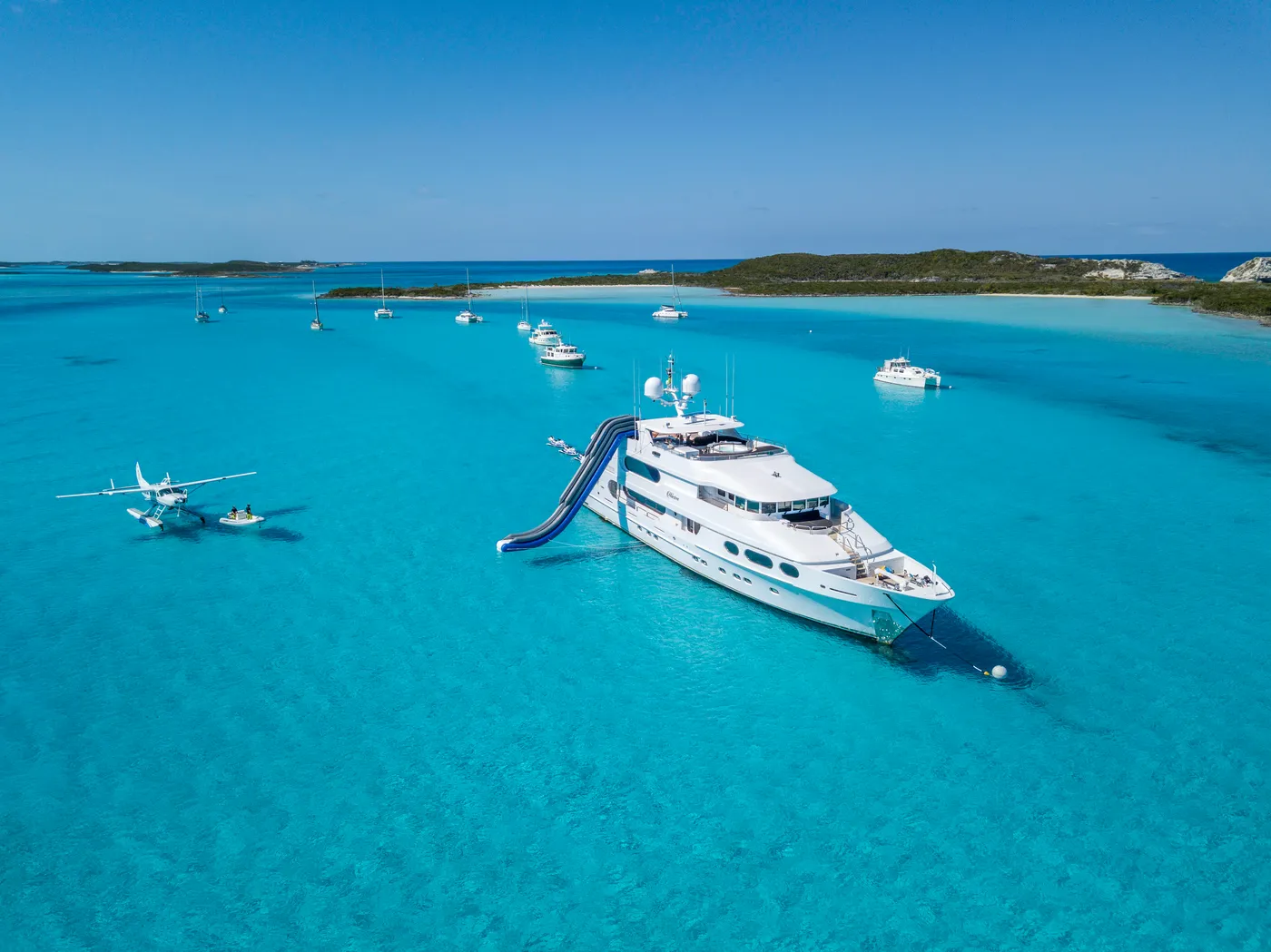
The Bahamas are not one cruising ground but several, and for a first week the Exumas are the obvious choice: a chain of cays south-east of Nassau with shallow, very clear water, short hops between anchorages and, in the middle, the first marine reserve in the Bahamas and the wider Caribbean. Many yachts are based in Nassau, the capital and main airport. Eleuthera and Harbour Island, east of Nassau, and the Abacos, further north, are alternatives for a second week or for a different style of trip. Two things set the Bahamas apart from the rest of the Caribbean and shape every quote: a 14% charter tax and water so shallow that the yacht’s draught and its tender decide where you can go.
Where in the Bahamas should you charter?
For a first charter, the Exuma Cays; for pink-sand beaches and a small-town feel, Eleuthera and Harbour Island; for a sailing area with many settlements close together, the Abacos. The country’s tourism ministry describes the Bahamas as 16 major islands spread over 100,000 square miles, so a week has to choose.
| Area | Character | Best for |
|---|---|---|
| The Exumas | A chain of 365 cays and islands; Exuma Park, Staniel Cay, Big Major Cay. | First-timers, families, snorkelling and beaches. |
| Nassau and Paradise Island | The capital, the main international airport and large resorts. | Starting and ending the week; a night ashore. |
| Eleuthera and Harbour Island | A long, narrow island 60 miles east of Nassau; Harbour Island’s pink sand and Spanish Wells. | Beaches and a quieter, village atmosphere. |
| The Abacos | A chain of cays spanning 120 miles, which the tourism ministry calls the boating capital of the Bahamas. | Sailing, fishing and hopping between small settlements. |
The Exumas divide into three areas: Great Exuma, Little Exuma and the Exuma Cays. The charter week happens mostly in the cays, the long string of small islands between Nassau and Great Exuma; Great Exuma, with George Town and the Exuma International Airport, is the southern end.
When is the best time to charter in the Bahamas?
From December to May. The Bahamas lie inside the Atlantic hurricane zone, and NOAA’s National Hurricane Center gives the official season as 1 June to 30 November, with the statistical peak on 10 September. Outside those months the weather is reliably good: the tourism ministry puts average winter lows at 70 °F (21 °C) and summer highs between 80 and 90 °F (26 to 32 °C).
| Period | What to expect |
|---|---|
| December to February | The core of the winter season. Cooler evenings, so pack a jacket or sweater. Junkanoo celebrations on Boxing Day and New Year’s Day. |
| March to April | Settled, warm weather. Spring break runs from late February to mid-April. |
| May | Warm and usually quiet, though May and June bring the most rain. |
| June to November | Hurricane season. Some yachts stay and charter through the summer, but the captain plans every day around shelter. |
Not every yacht leaves in summer: one published seven-day Exumas itinerary is marked as ideal for the summer season, while a nine-day one from Staniel Cay is marked as ideal for the winter. If your dates fall between June and November, ask how the contract handles a named storm before you sign: whether the route can change, whether the dates can move and what happens to your payment.
Rain showers do not usually spoil a day: squalls and thunder showers pass through quickly.
A nine-day route through the Exuma Cays
The days follow a published nine-day Staniel Cay to Staniel Cay itinerary, marked as ideal for the winter season, the months this guide recommends. Guests fly in and out of Staniel Cay, and most hops are 5 to 15 nautical miles by the itinerary’s estimates: what limits the route is the depth of water and the wind, not the miles.
Rocky Dundas on day 4 and days 5 to 7 are inside the Exuma Cays Land and Sea Park, with rules of its own; the box after day 9 gathers them.
| Day | Leg | Miles |
|---|---|---|
| 1 | Staniel Cay | — |
| 2 | Staniel Cay → Sampson Cay | — |
| 3 | Sampson Cay → Pipe Creek → Big Major Cay | — |
| 4 | Big Major Cay → Compass Cay | — |
| 5 | Compass Cay → O'Brien's Cay | — |
| 6 | O'Brien's Cay → Warderick Wells | — |
| 7 | Warderick Wells → Shroud Cay | — |
| 8 | Shroud Cay → Norman's Cay → Allen Cays | ≈ 70 |
| 9 | Allen Cays → Staniel Cay | — |
Day 1: Staniel Cay
The week starts and ends in the same place, with a first night at anchor off Staniel Cay.
Fly in to Staniel Cay, meet the yacht at the yacht club and spend the first night at anchor nearby.
Day 2: the plane wreck, Thunderball Grotto and Sampson Cay
A day spent mostly under water: a wreck turned reef, and a cave you swim into.
A morning of snorkelling: first the wreck of a drug-smuggling plane that now serves as a reef, then Thunderball Grotto, an underwater cave just west of Staniel Cay, with its entrance below the surface, that can be swum through at low tide. The afternoon is for water toys off Sampson Cay, and the night at anchor.
Day 3: Pipe Creek and Big Major Cay
Sandbanks in the morning, swimming pigs in the afternoon.
The tender runs to Pipe Creek, a string of cays with sandbanks and shallow cuts, for the morning. Lunch is underway to Big Major Cay, where the pigs swim out to meet the tender.
Day 4: Compass Cay and Rocky Dundas
Caves, a natural pool and nurse sharks.
North to Compass Cay, for the caves of Rocky Dundas on the north side and Rachel’s Bubble Bath, a natural pool whose best moment depends on the tide. At Compass Cay Marina there are nurse sharks.
Day 5: O’Brien’s Cay
Into the park, and a reef thick with fish.
A second plane wreck, deeper than the first, and the Aquarium reef. O’Brien’s Cay is one of the park’s mooring fields. The whole park is a no-take zone: no fishing, conching or shelling, and nothing living or dead leaves it.
Day 6: Warderick Wells
A day on foot, and a sunset dinner on board.
The park headquarters, with more than 4 miles of trails and the climb to Boo Boo Hill. The anchorages here are very shallow, with sandbars that rise at low tide.
Day 7: Shroud Cay
A quiet bay and creeks to paddle.
Water toys in the bay and paddleboards in the creeks, where the park’s rules are strict (see the box).
Day 8: Norman’s Cay, the sandbar and the Allen Cays
The longest day of the route, from a sandbar lunch to the rock iguanas.
The itinerary puts this day at about 70 nautical miles. Snorkelling at Norman’s Cay, lunch on the Exumas sandbar if the tide allows, and the rock iguanas of the Allen Cays in the afternoon.
Day 9: Staniel Cay
A last swim before the flight home.
Back to Staniel Cay.
Before you plan
- Flights (day 1). The itinerary warns that Staniel Cay is not a port of entry for flights from the United States, while the tourism ministry lists Staniel Cay Airport as an official port of entry with customs and immigration: ask the flight operator before booking.
- Exuma Park (days 4 to 7). The national park bylaws the Bahamas National Trust published in the Official Gazette in 2022 apply. A yacht may anchor only in areas the Trust has marked with a sign or that an authorised navigation publication identifies, never where the anchor can damage coral or sea grass; every vessel goes at idle speed in mooring fields and anchorages. The Trust publishes mooring fees only up to 150 feet (about 46 m) and does not take reservations, and anchoring is never allowed in the mooring fields. Whether a yacht of 30 to 50 metres can moor or anchor at each park stop, and where it spends the nights of days 5 to 7, is for the captain to confirm with the park on VHF 09. The fees are further down.
- Rocky Dundas (day 4). Go only in settled weather, because the entrance is exposed to the easterly swell, and the bylaws forbid entering a cave in a park unless accompanied by a warden or other authorised personnel. Without one, guests snorkel outside the caves.
- Warderick Wells (day 6). The Warderick Wells North, Emerald Rock and Pirates Lair mooring fields are requested in advance on VHF channel 09, and paying in advance does not reserve one. With anchorages this shallow, whether a yacht of 30 to 50 metres can lie here depends on its draught, which is for the captain to judge.
- Shroud Cay (day 7). The north tidal creek is an idle-speed, no-wake zone, motorised vessels may not enter the other creeks, and jet skis keep at least 300 yards (about 275 m) from any moored or anchored vessel and stay out of the creeks altogether.
- Feeding animals (days 3 and 8). No one may feed an animal in the park unless a Trust sign allows it. The itinerary has the crew hand out food for the pigs; the tourism ministry’s own advice on Big Major Cay is to look but not touch. It also says the iguanas are protected by law, and its page even mentions visitors bringing them vegetables; the International Iguana Foundation, however, lists feeding by tourists among their threats (see below): leave the food on board.
- Spearfishing (day 8). The itinerary suggests it. Leave it out. The tourism ministry says spear guns are not allowed anywhere in the Bahamas. A spear (a Hawaiian sling or pole spear) needs written permission on the sportfishing permit, which anyone who is not Bahamian needs to fish from a foreign-owned boat, and spearfishing is prohibited within 200 yards of the coast of any Family Island. Inside the park, the bylaws ban spear guns.
Starting or ending in Nassau
The other published Exumas itinerary, seven days and marked as ideal for the summer season, covers many of the same cays in a different order: from Warderick Wells south to Staniel Cay and Compass Cay, then north to Shroud Cay, the Allen Cays, Norman’s Cay and Highbourne Cay, then across to Harbour Island in Eleuthera on day 6 and to Nassau on day 7. It suits a week that ends in Nassau; for summer dates, read the storm clause first.
Big Major Cay and the Allen Cays
Big Major Cay, sometimes called Pig Beach, is home to the swimming pigs. The tourism ministry says it began in the early 1990s with five piglets, and that the pigs swim out whenever a boat arrives. The island can only be reached by boat, and it is a short run from Staniel Cay.
The Allen Cays rock iguanas are a different case. The International Iguana Foundation classifies them as critically endangered, with a population of between about 1,000 and 1,500, and lists supplemental feeding by tourists among the threats; one of the cays receives 150 or more visitors a day. Look, photograph and leave the fruit on board.
Exuma Cays Land and Sea Park: how do moorings, rules and fees work?
The Bahamas National Trust (BNT) runs the park. It was established in 1958, covers 112,640 acres (about 456 km²) of land and sea, and the BNT describes it as the first land and sea park in the world. The park office is on Warderick Wells and answers on VHF channel 09, with channel 16 for emergencies.
Moorings and anchoring
- No reservations. The park does not accept reservations, and paying in advance does not guarantee a mooring.
- Warderick Wells is assigned by radio. The Warderick Wells North, Emerald Rock and Pirate’s Lair mooring fields require a call on VHF 09 in advance; every other mooring field in the park is first come, first served.
- Where you may anchor. Anchoring is not permitted in the mooring fields, on coral reefs or in certain other designated areas.
- Idle speed. All vessels, tenders and jet skis included, must go at idle speed in any mooring field or anchorage, and jet skis must stay at least 300 yards (about 275 m) from any moored or anchored vessel.
- Shroud Cay creeks. The north tidal creek is an idle-speed, no-wake zone, and motorised vessels may not enter the other creeks: paddle them.
- No-take zone. No fishing, conching, shelling or lobstering, and nothing living or dead may be removed. The BNT warns of fines and confiscation of vessels for poaching.
- Rubbish. There is no trash disposal in the park: everything you bring in goes out again.
What a charter yacht pays
Charter vessels pay a daily mooring fee by length, plus $14 per person per day, and all park fees carry 10% VAT at checkout. The BNT publishes these charter rates, in Bahamian dollars, which the tourism ministry says are on a par with the US dollar:
| Yacht length | Daily mooring fee (charter vessels, before VAT) |
|---|---|
| Up to 39 ft 11 in (about 12 m) | BSD 27.27 |
| 40 to 49 ft 11 in (about 12-15 m) | BSD 36.36 |
| 50 to 59 ft 11 in (about 15-18 m) | BSD 45.45 |
| 60 to 69 ft 11 in (about 18-21 m) | BSD 72.73 |
| 70 to 89 ft 11 in (about 21-27 m) | BSD 104.55 |
| 90 to 119 ft (about 27-36 m) | BSD 136.36 |
| 120 to 150 ft (about 37-46 m) | BSD 172.73 |
Anchoring in the park is also charged, at a daily rate that doubles for yachts of 90 feet and over. The mooring scale stops at 150 feet; for a larger yacht, the captain confirms with the park where it can lie. Yachts that come back often can buy the BNT’s charter vessel annual pass, at $22,560 a year. On a crewed charter, the captain pays these fees and charges them to the APA or includes them in the quote; ask which.
What taxes apply to a yacht charter in the Bahamas?
A 14% charter tax on the charter fee. IYC describes it as a consolidated 14% charter tax on foreign yacht charters in Bahamian waters, collected through the Bahamas Port Department. YachtCharterFleet explains its origin: in mid-2022 the government introduced a 10% VAT on yacht charters, on top of a longstanding 4% Port Department fee. A Chambers and Partners article from April 2026 confirms that the 14% remains unchanged and that the Port Department can now collect the whole amount as a single payment.
The same article describes how a charter is set up under the Boat Registration (Amendment) Act, 2025:
- Foreign charter licence. Every foreign charter, meaning a yacht with non-Bahamian owners, must obtain a Foreign Charter Licence before arriving in the Bahamas. It is valid for one year and is applied for through the Port Department.
- Who contracts the charter. Soliciting charter guests in the Bahamas is prohibited unless the charter originates while the yacht is in the country and is negotiated and contracted by a Bahamian citizen or by a company approved by the Port Authority and licensed under the Business Licence Act, 2023. That local broker or company collects and remits the charter fees and VAT.
- Short charters. Yachts under 55 feet cannot be chartered for less than 48 hours.
In practice: ask the agency who signs the contract in the Bahamas, whether the yacht holds its Foreign Charter Licence, and whether the 14% is included in the quote or added on top.
Does a charter yacht need a cruising permit?
The cruising permit is the visitor’s permit for private boats: the tourism ministry says it is required for all foreign, private, non-commercial pleasure boats. A foreign charter yacht needs its Foreign Charter Licence and must also meet local permit and clearance requirements: ask the captain which permits the quote includes.
Those fees have changed twice in a year. Soundings reports that the fees introduced on 1 July 2025 tripled the cost of a permit for some boats, and that a new, lower schedule took effect on 1 April 2026. Under the 2026 regulations, a 30-day permit costs $350 for boats of 51 to 100 feet and $600 for boats over 100 feet, and a 12-month permit for a boat over 100 feet costs $3,000. Separate anchorage and fishing permits apply, the first three non-resident passengers aged six and over are included and each additional one pays $30.
The AIS rule is not limited to private boats: under the Port Authorities (Amendment) Act 2025, every foreign vessel of 50 feet and over, charter yachts included, must keep an AIS transponder switched on at all times.
Which yacht suits the Bahamas?
One with a modest draught, or one with a very capable tender. Camper & Nicholsons describes hundreds of islands and cays scattered across clear, shallow water; on the banks between the cays, what counts is how much water the yacht needs, not its length.
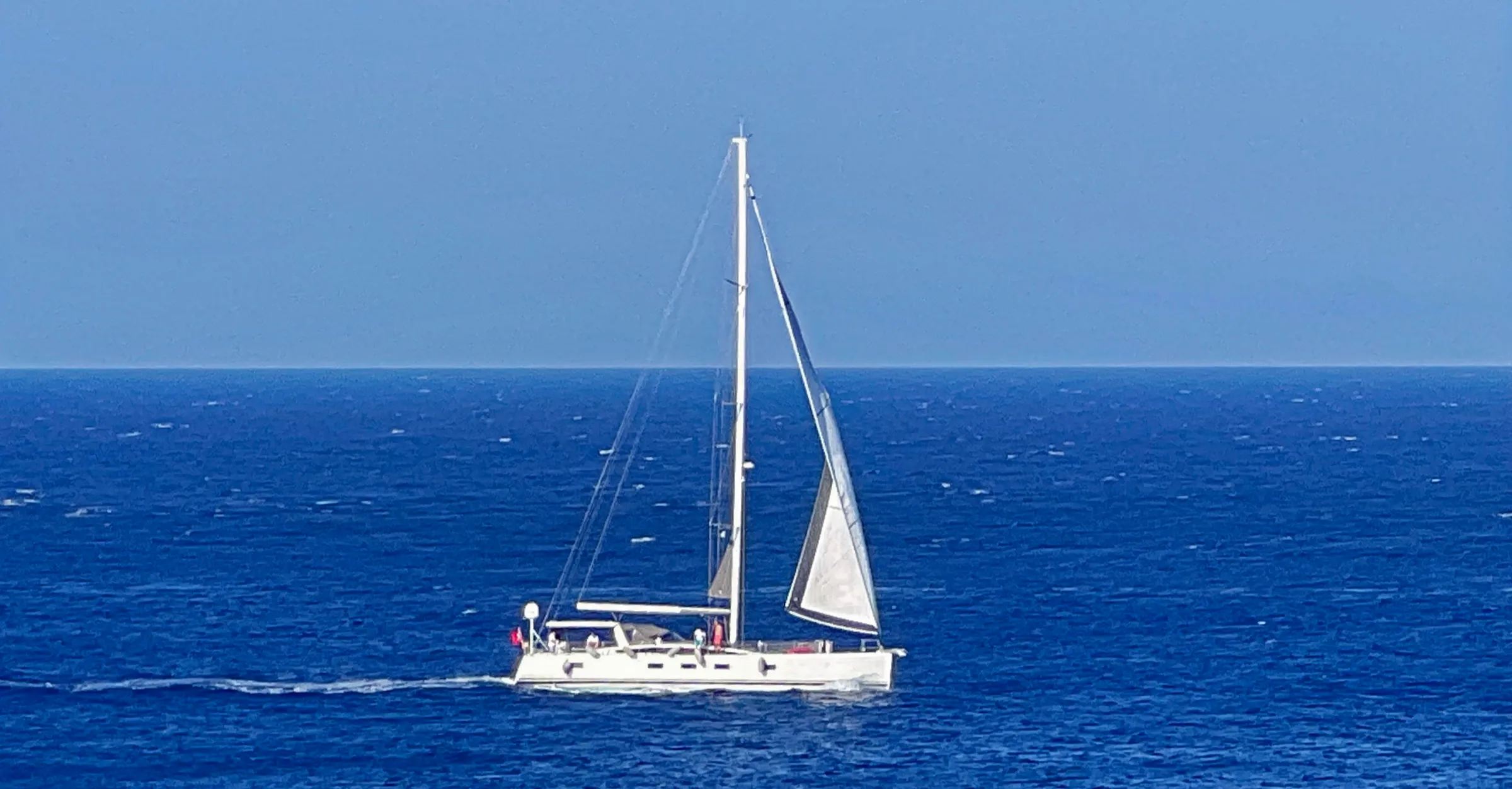
- Crewed catamarans offer shallow draught, a lot of deck and stability at anchor. Boatbookings lists many based in Nassau and the Exumas.
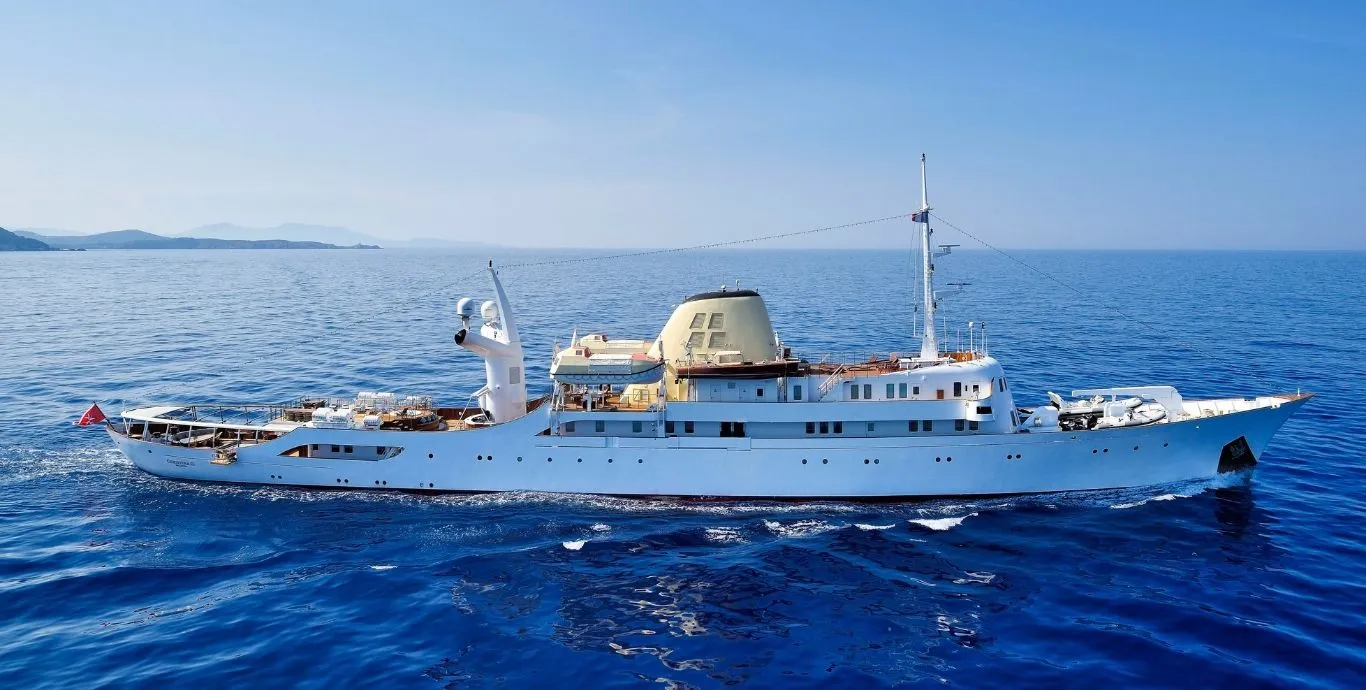
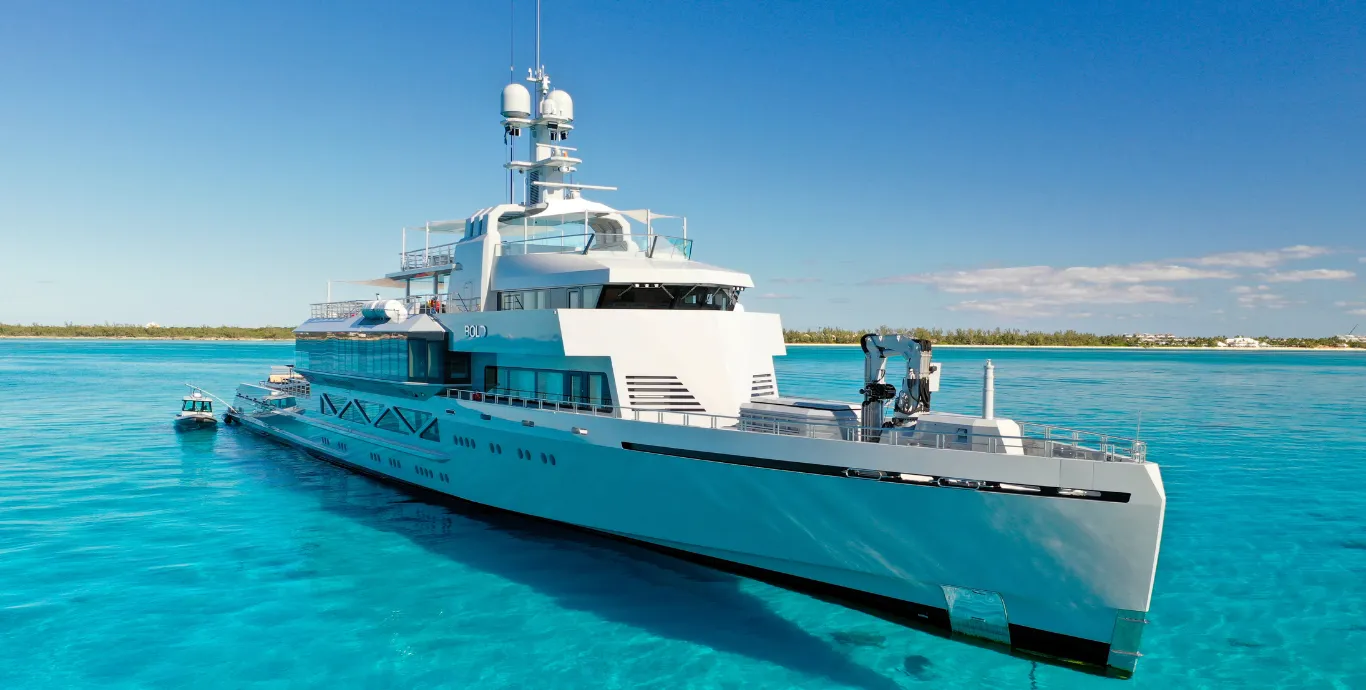
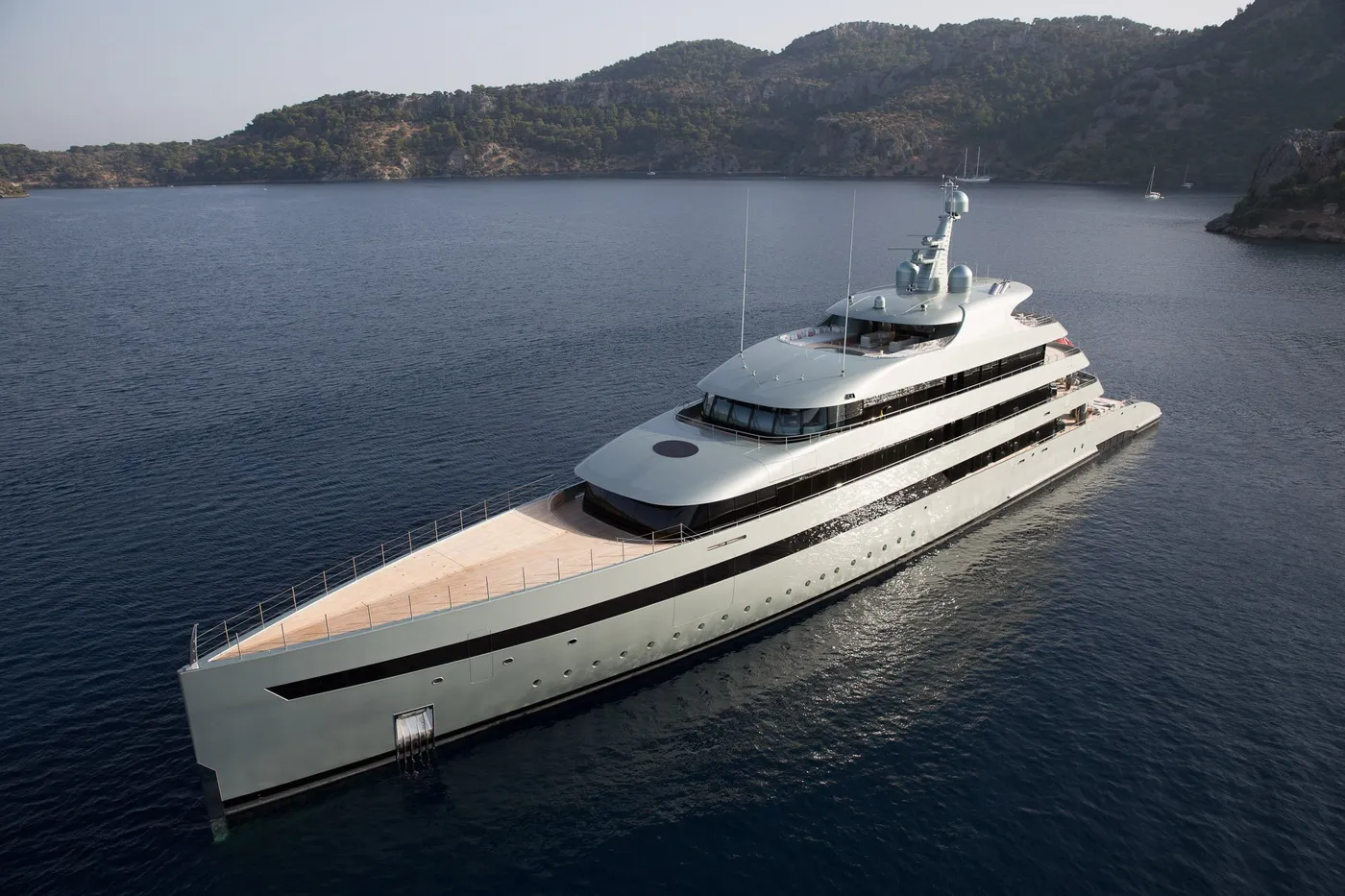
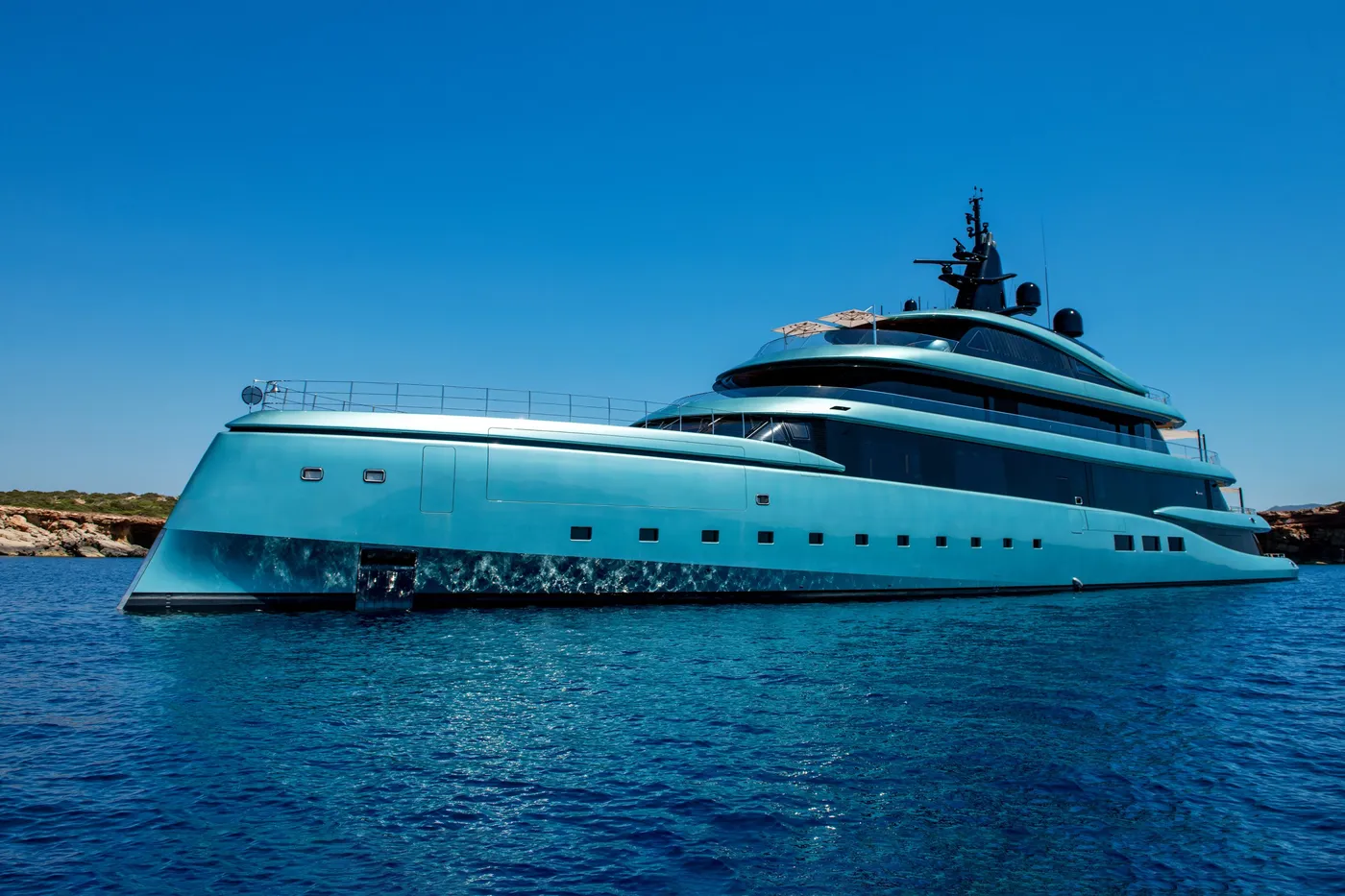
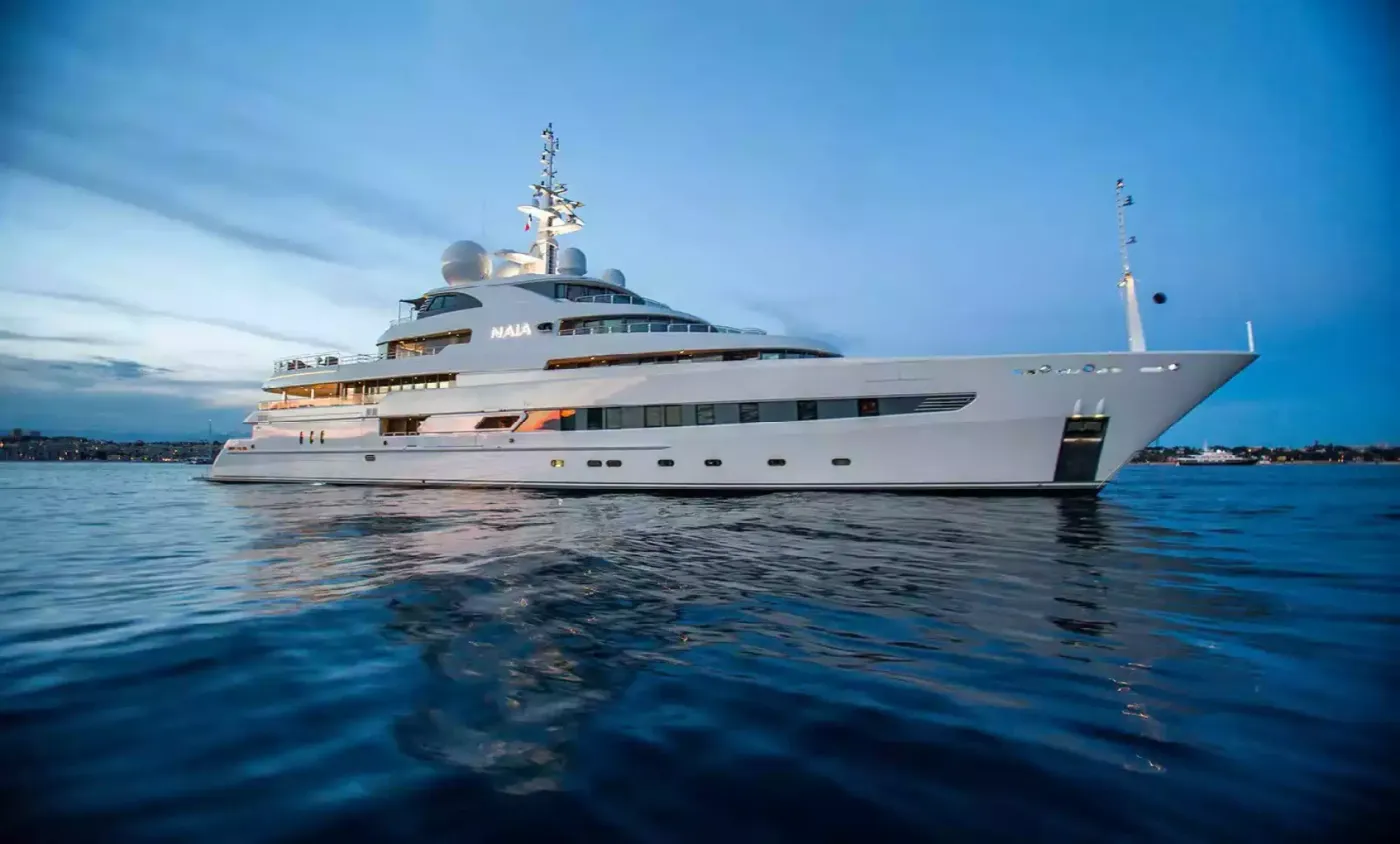
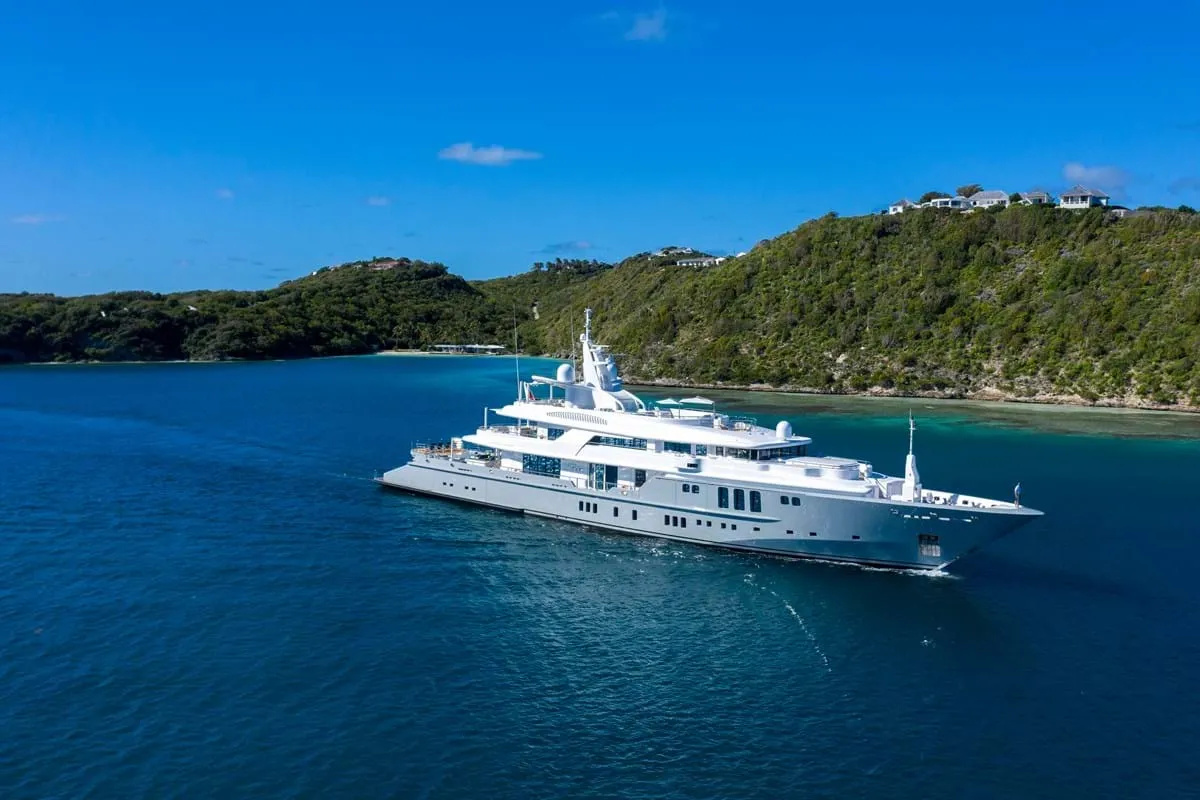
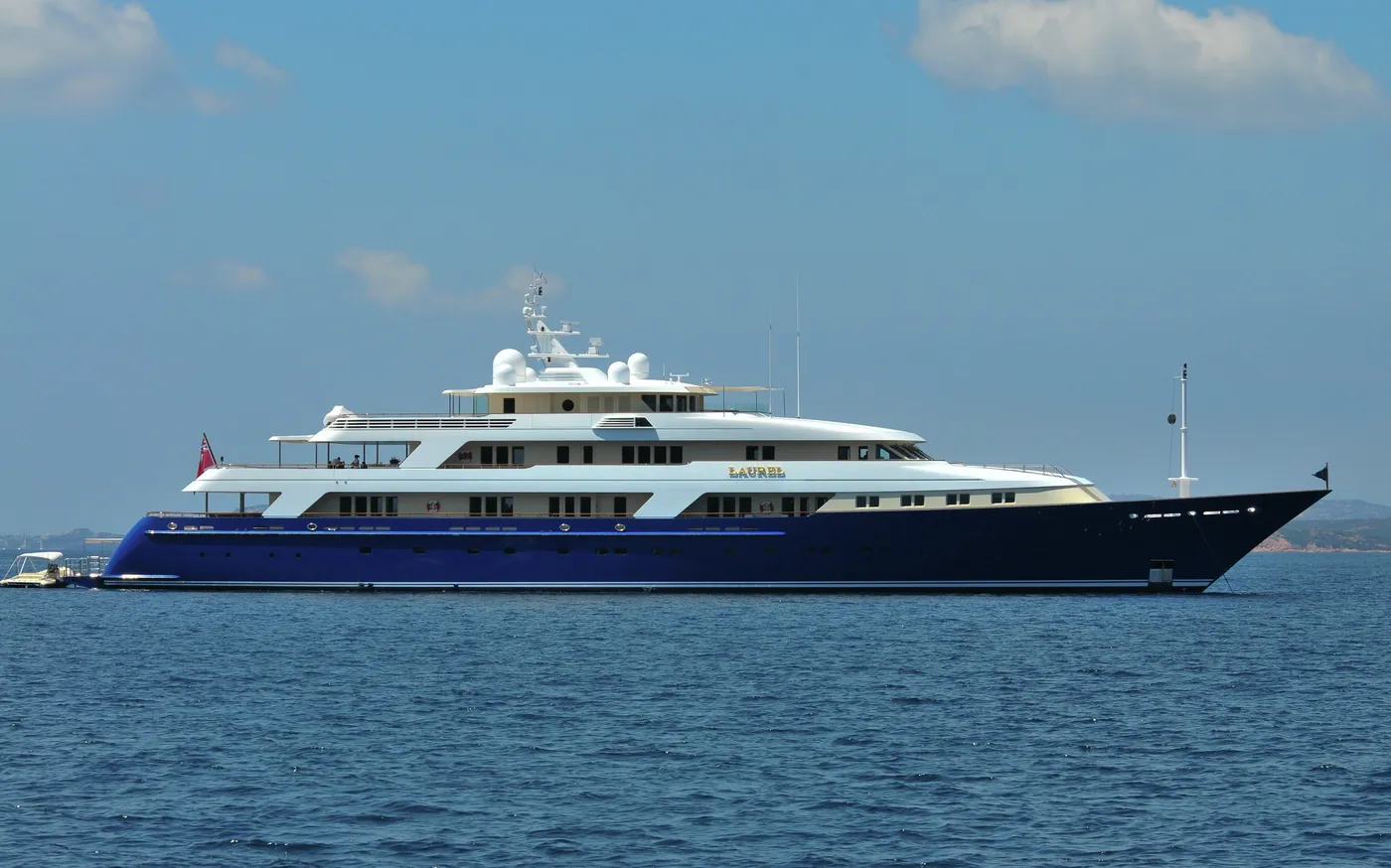
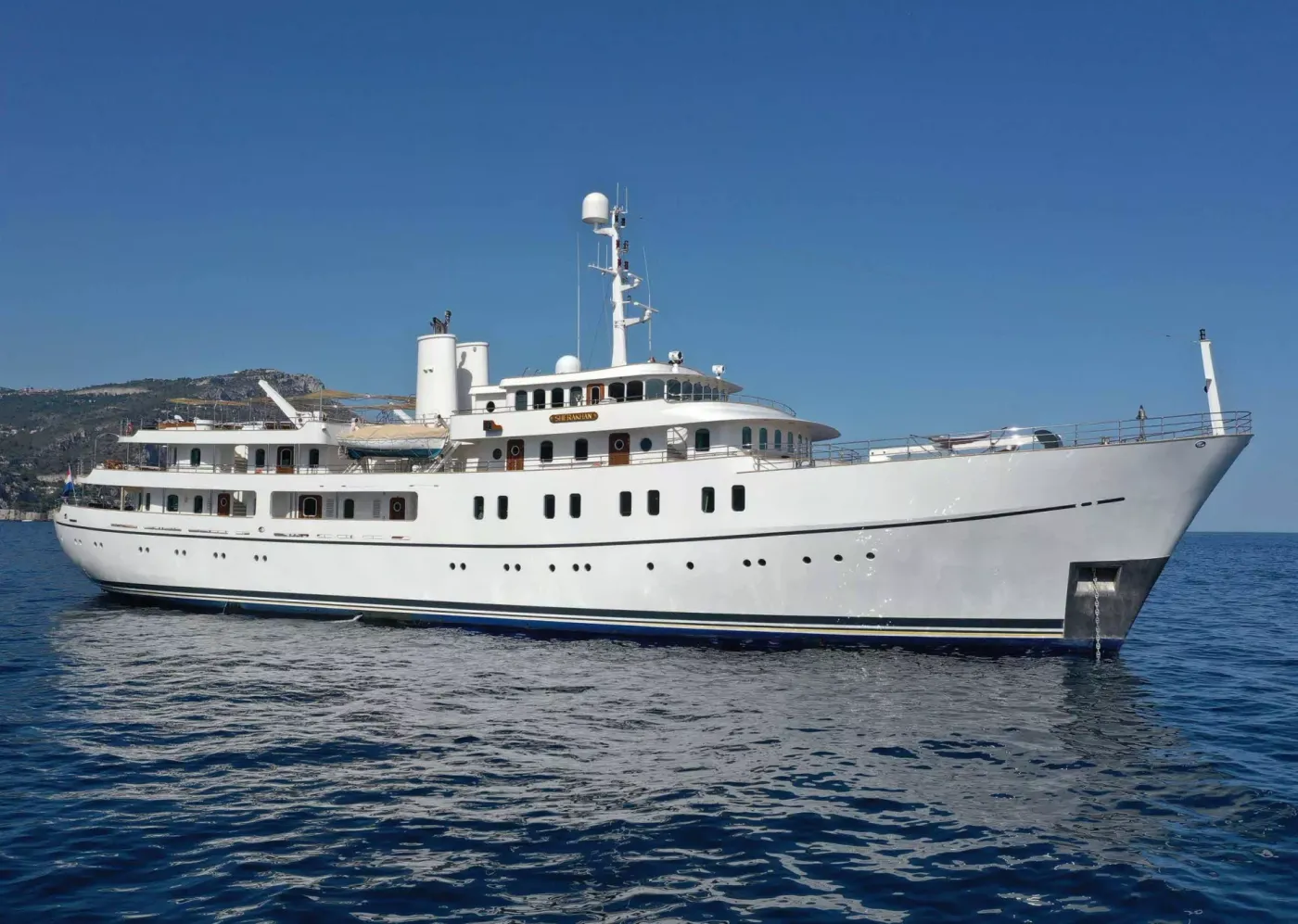
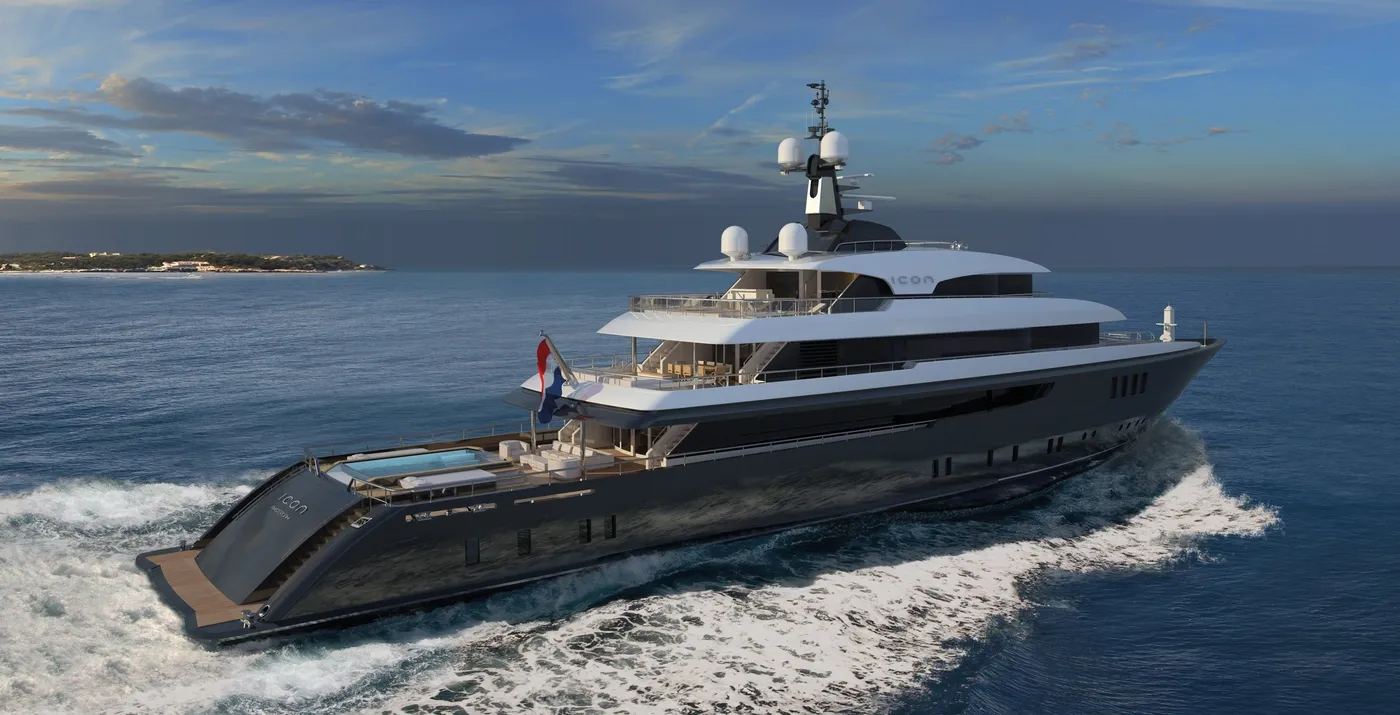
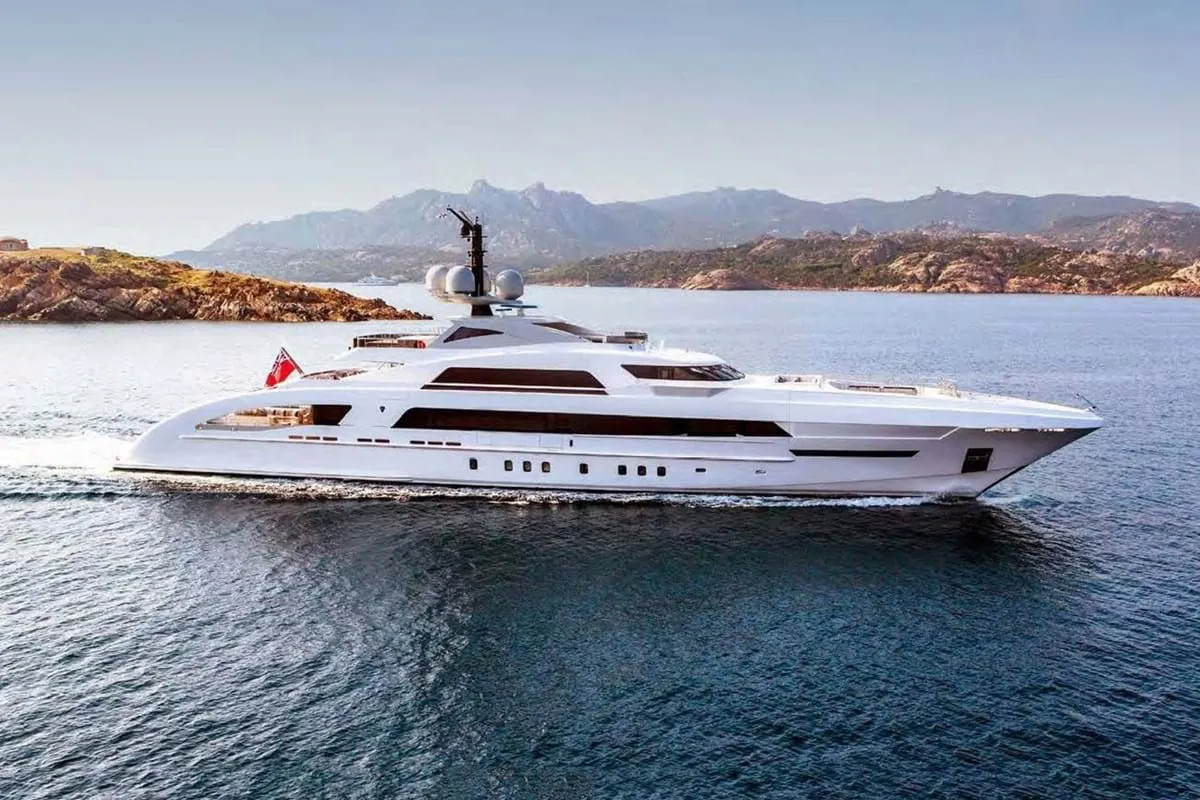
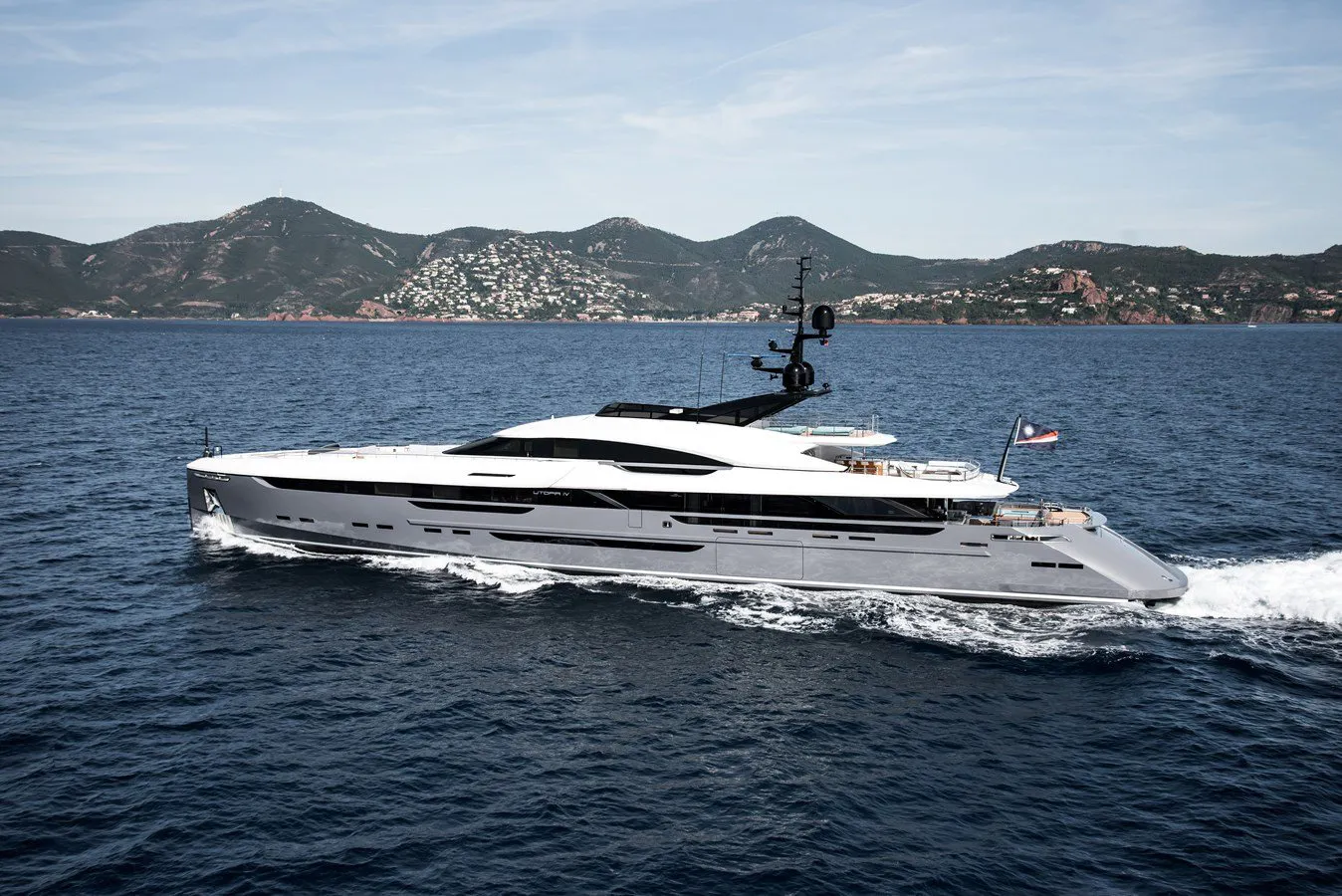
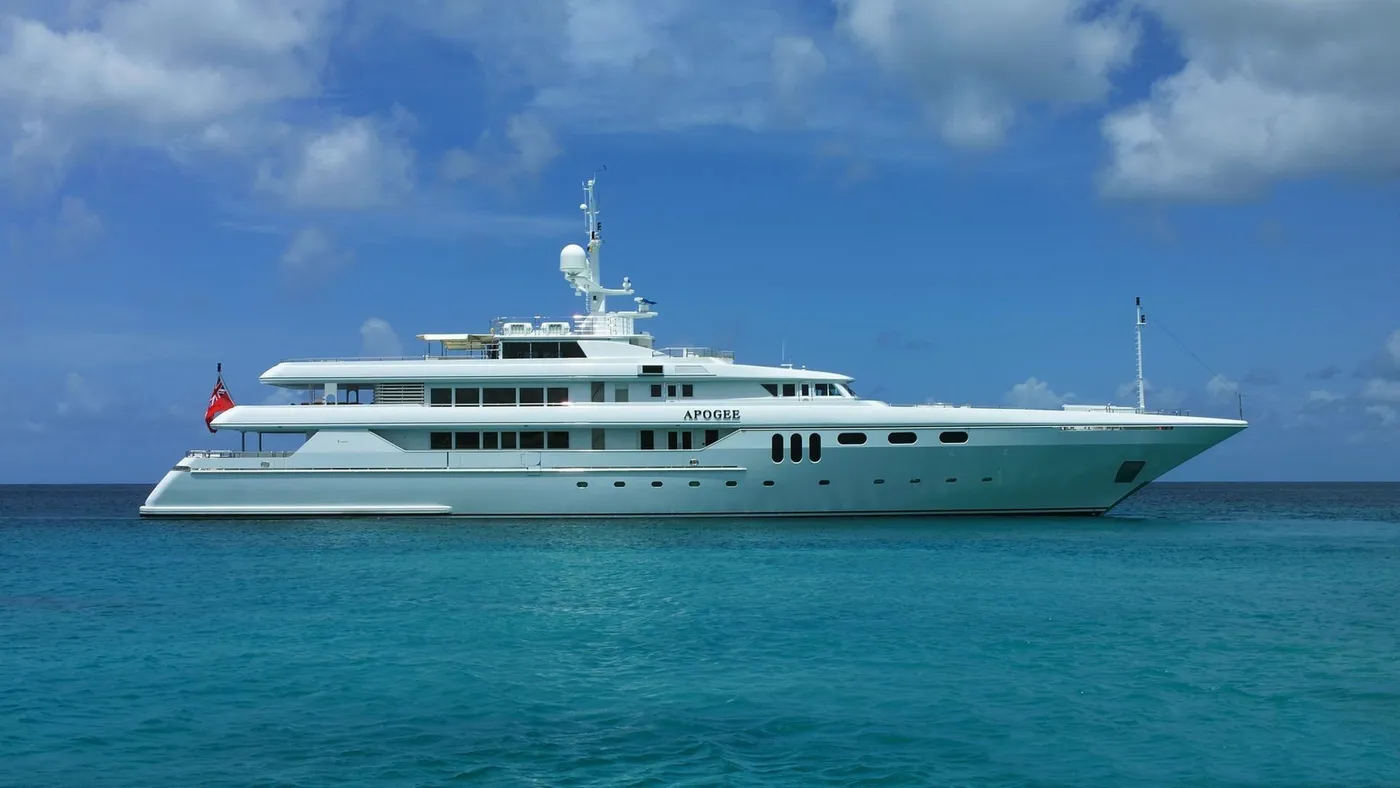
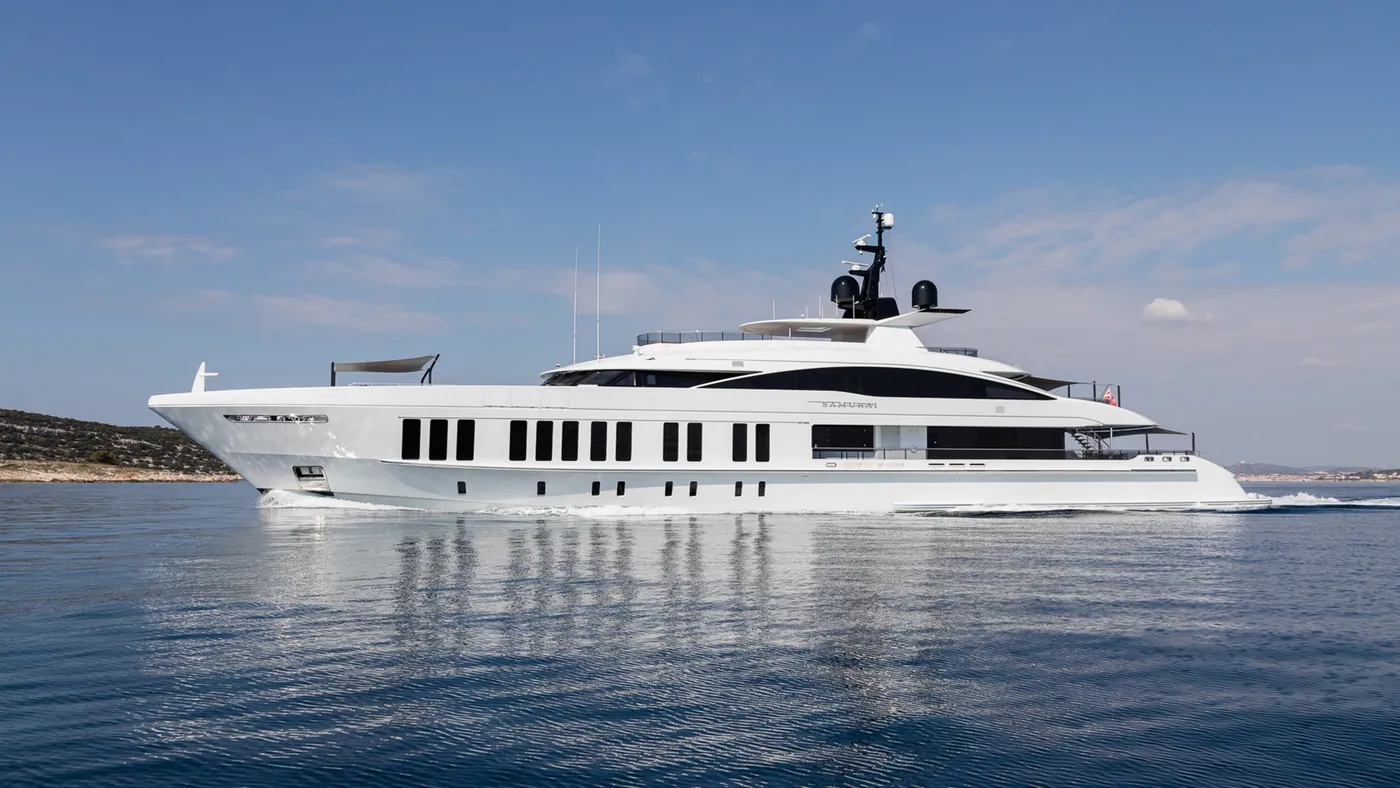
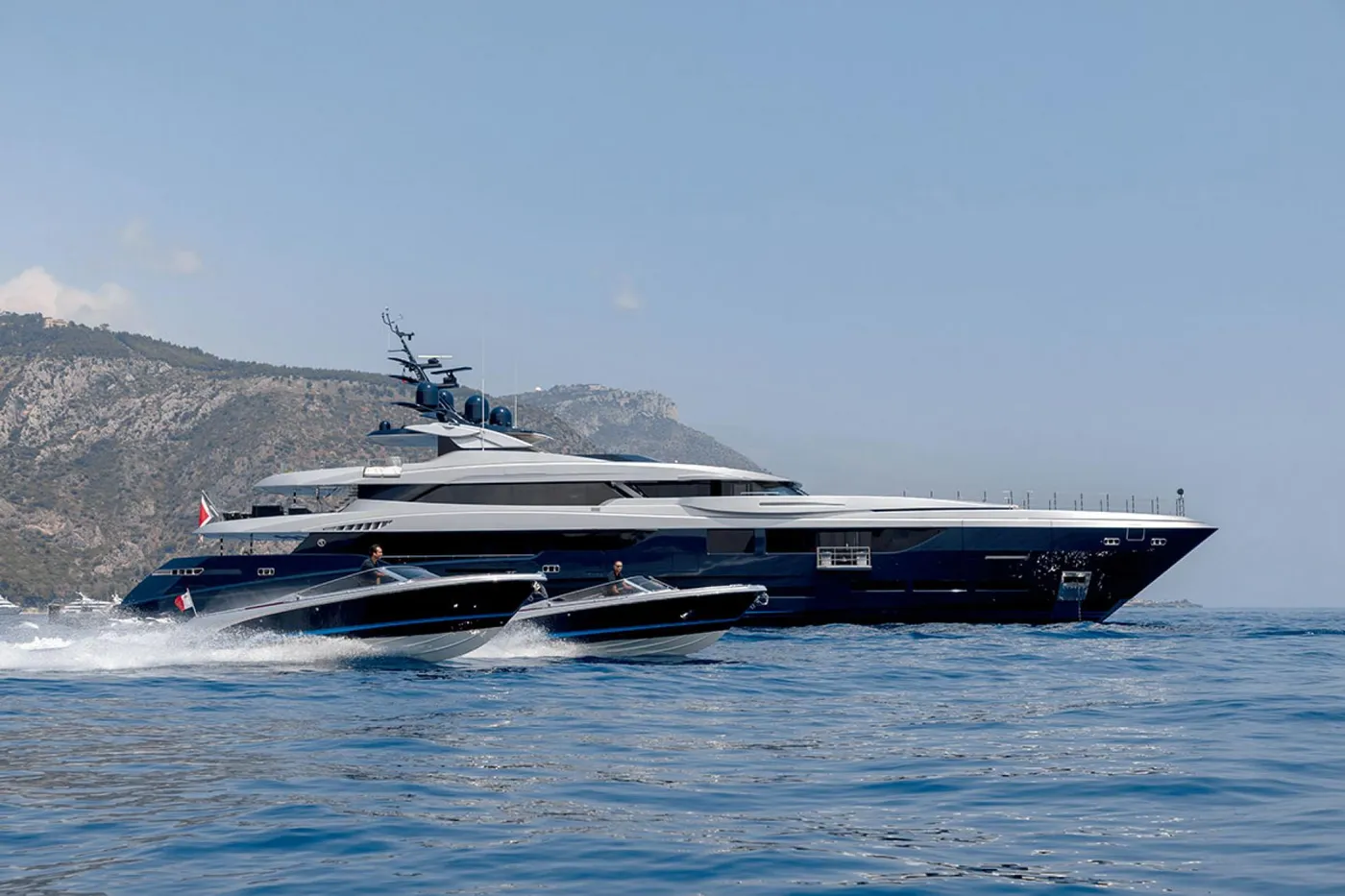
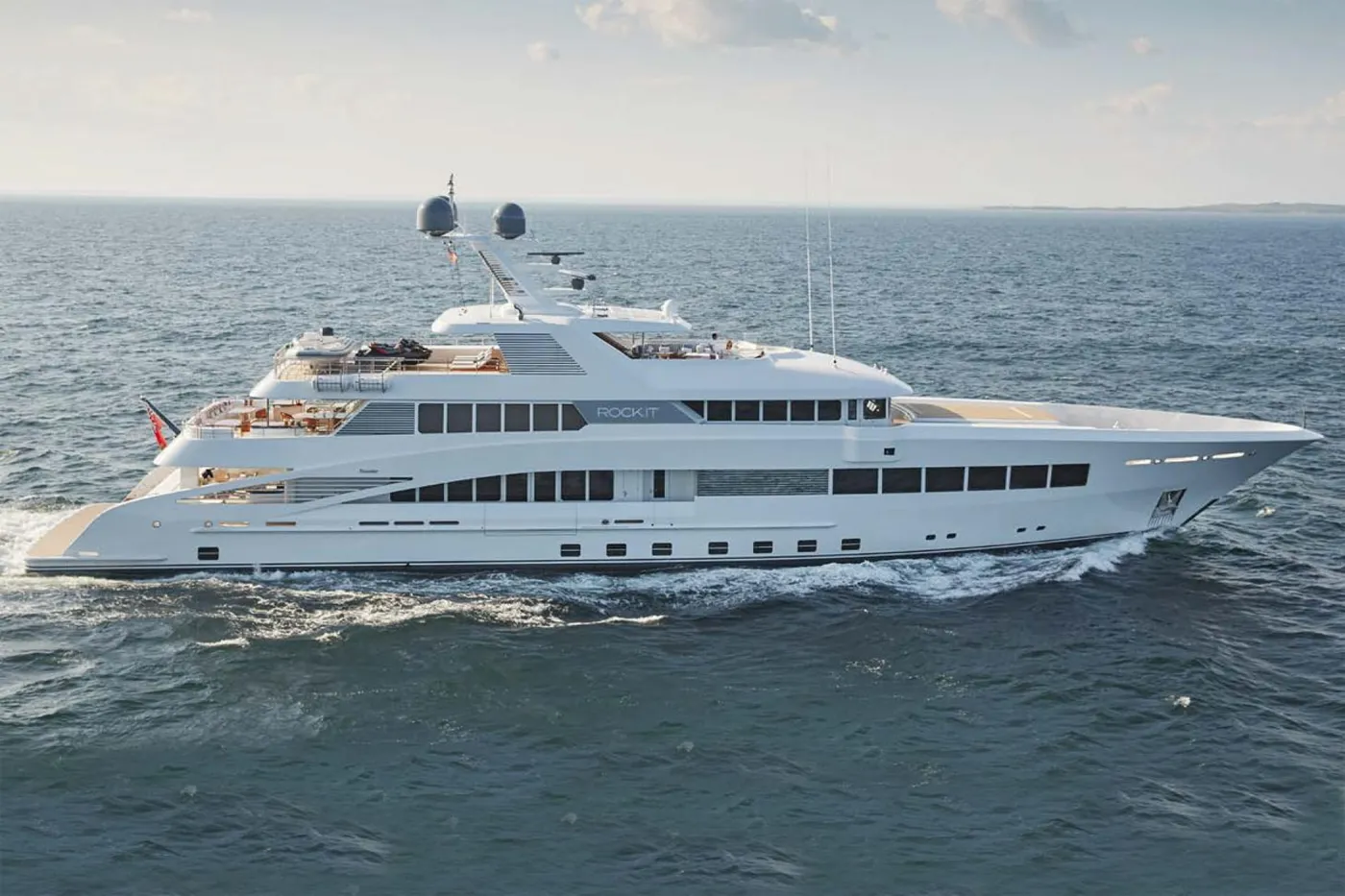
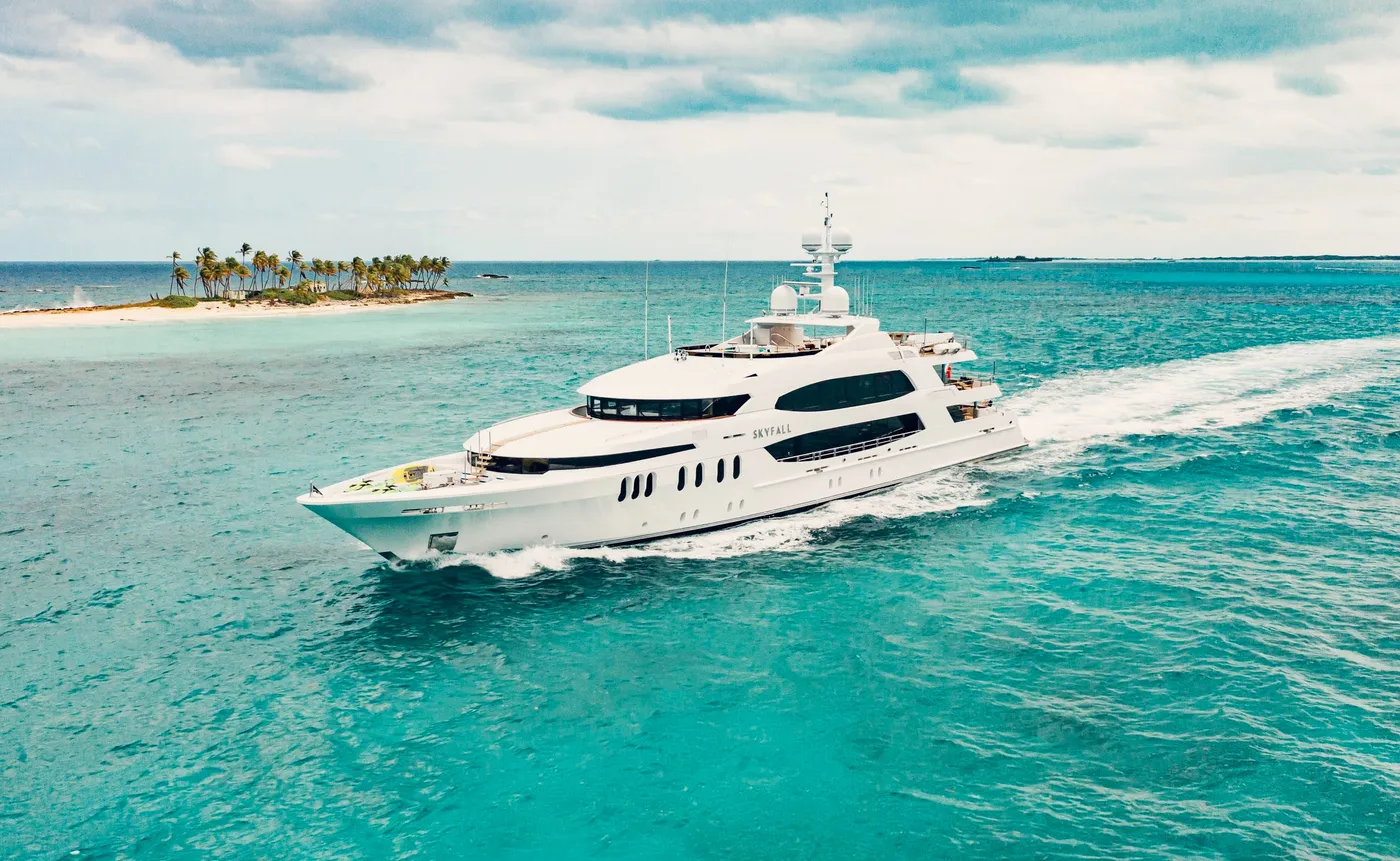
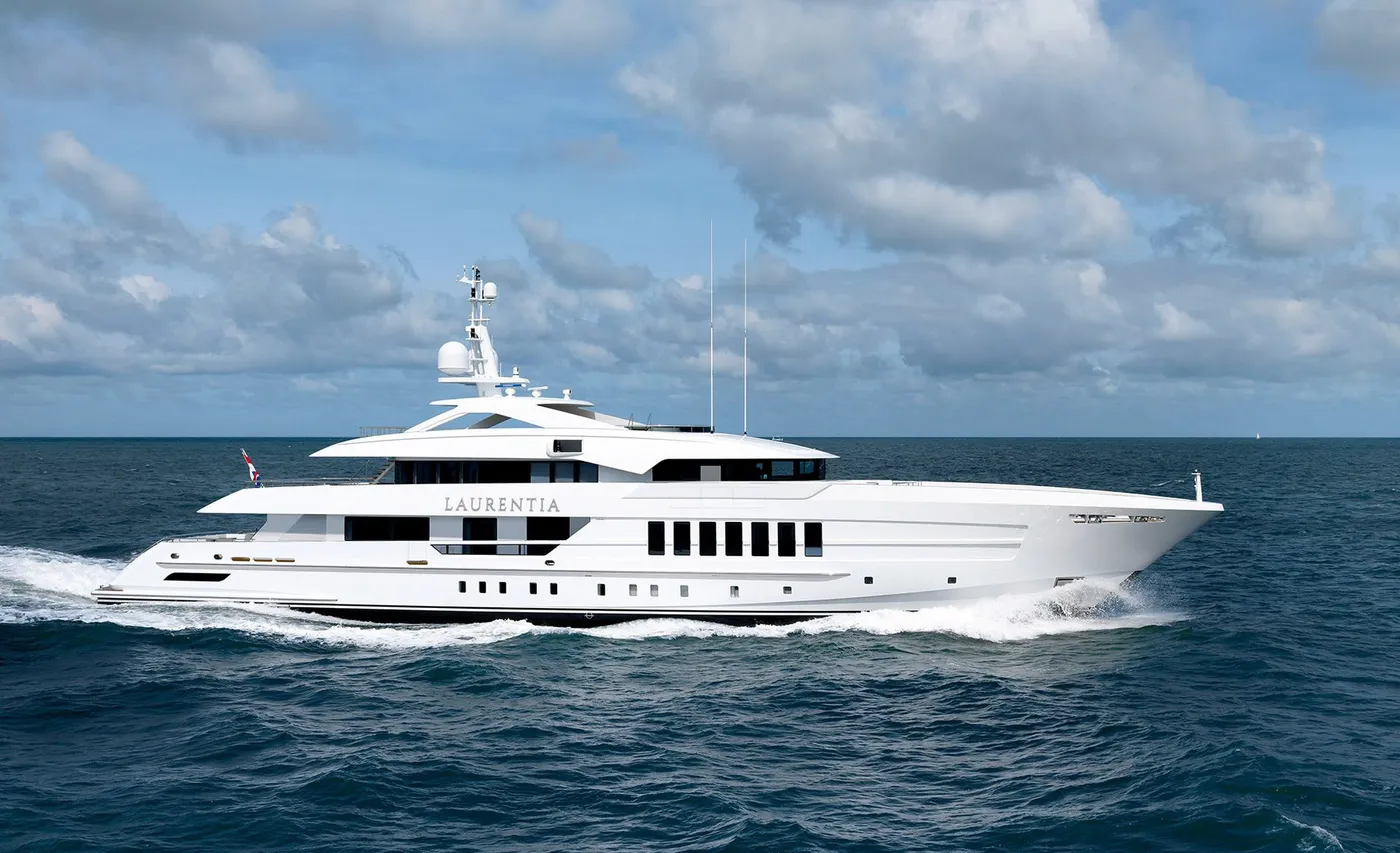
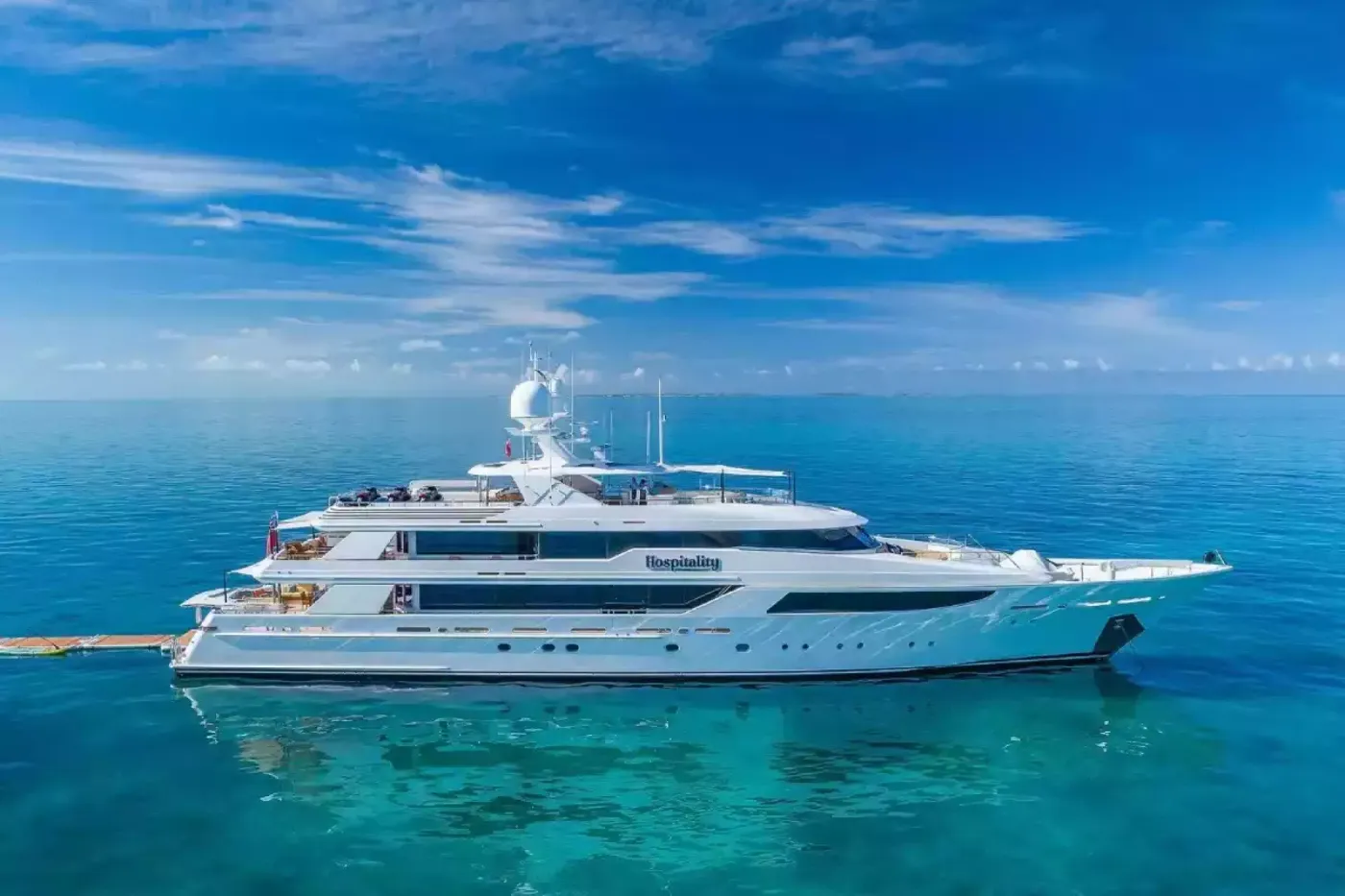
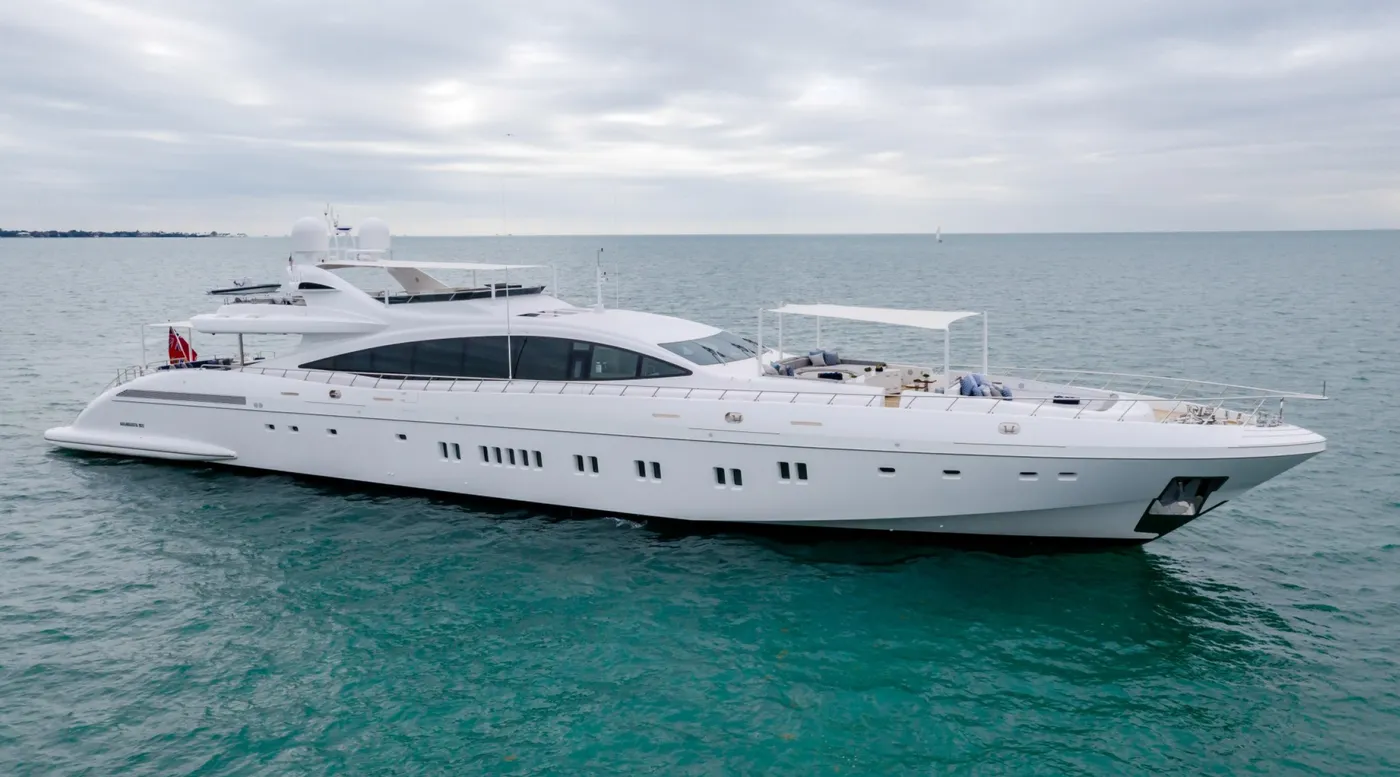
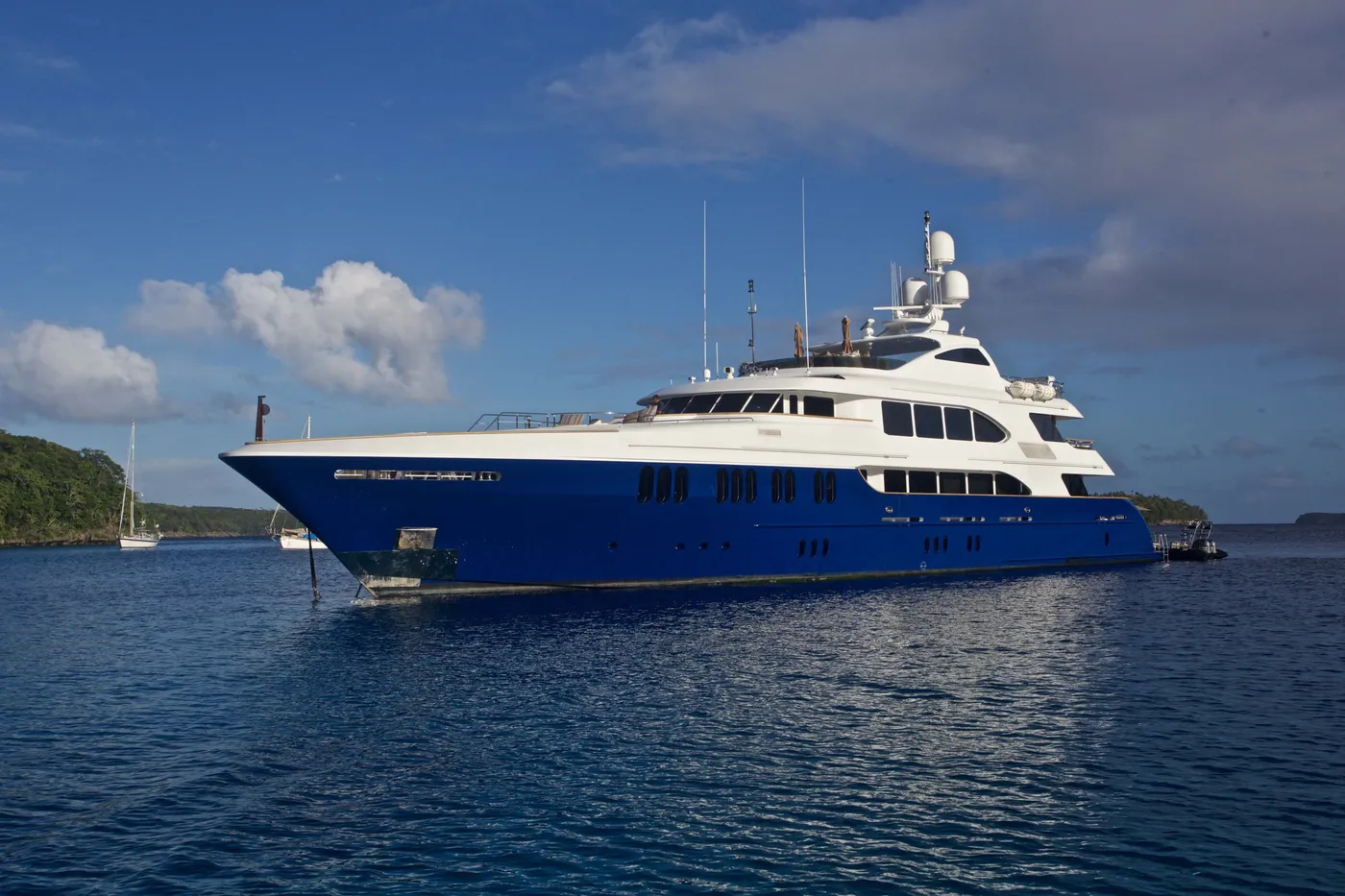
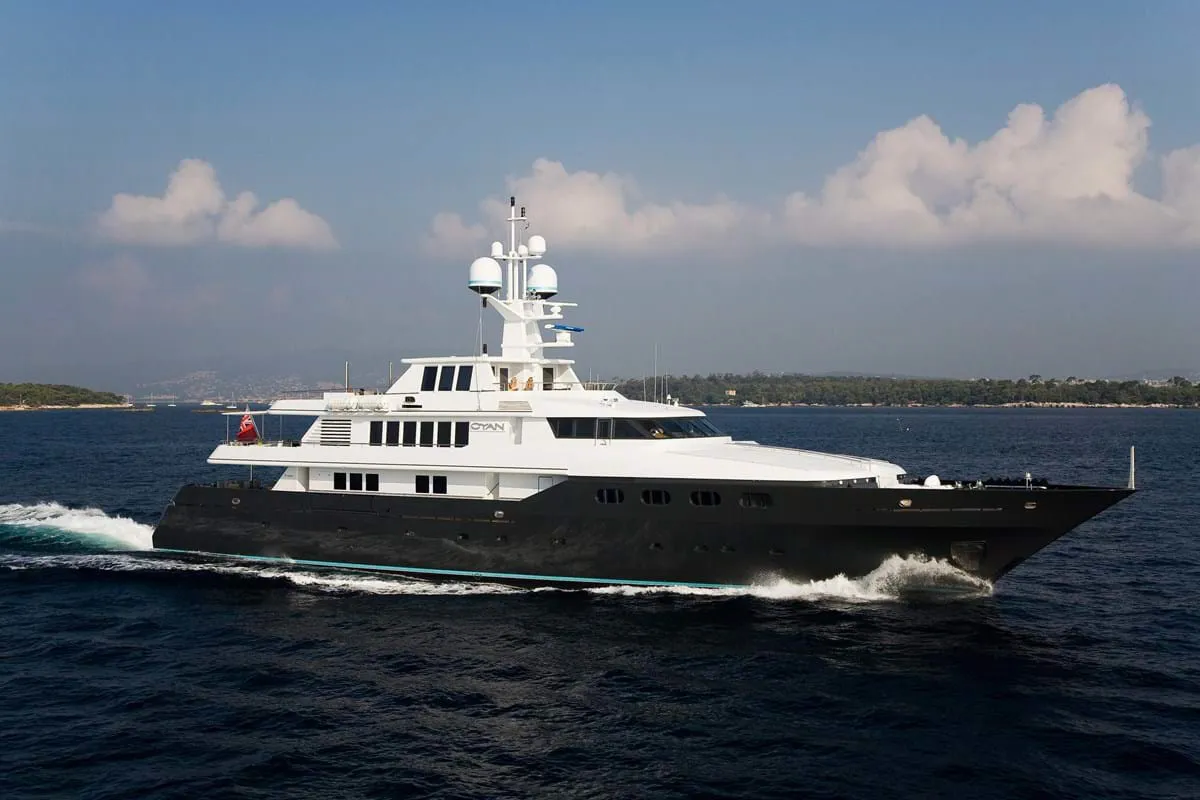
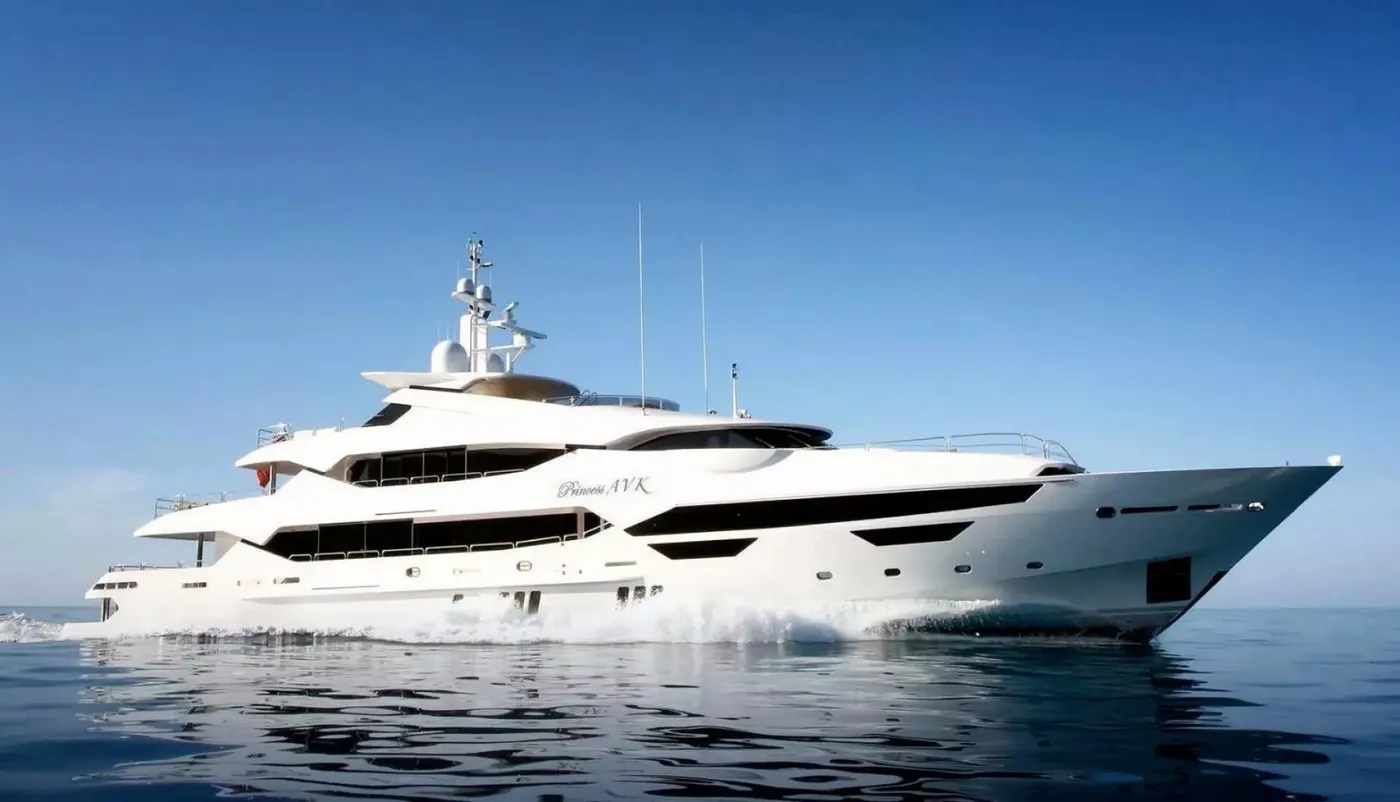
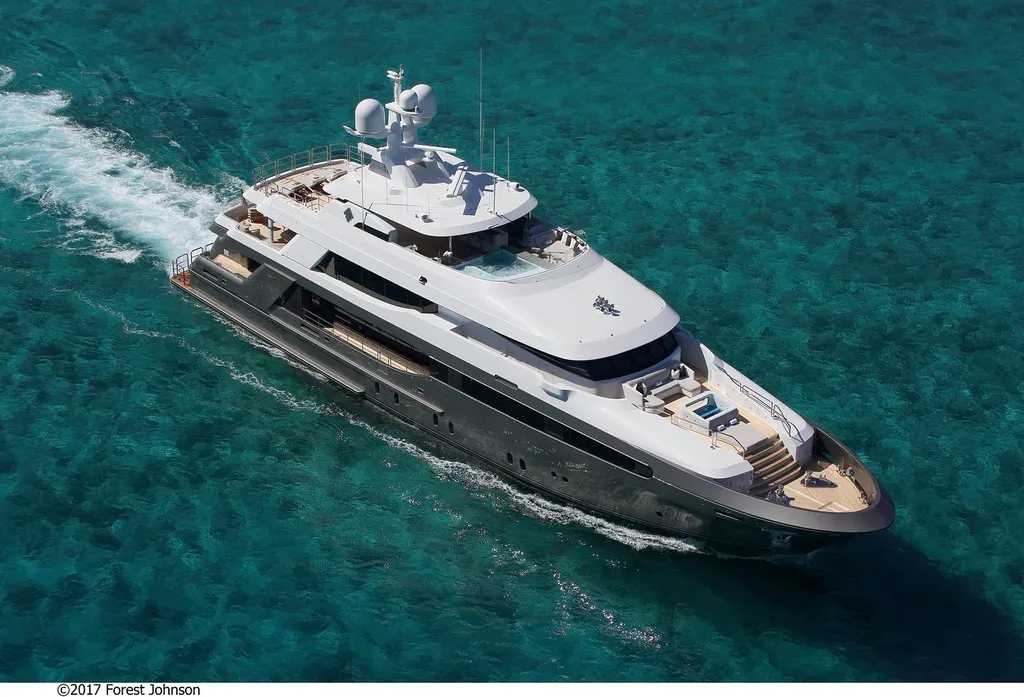
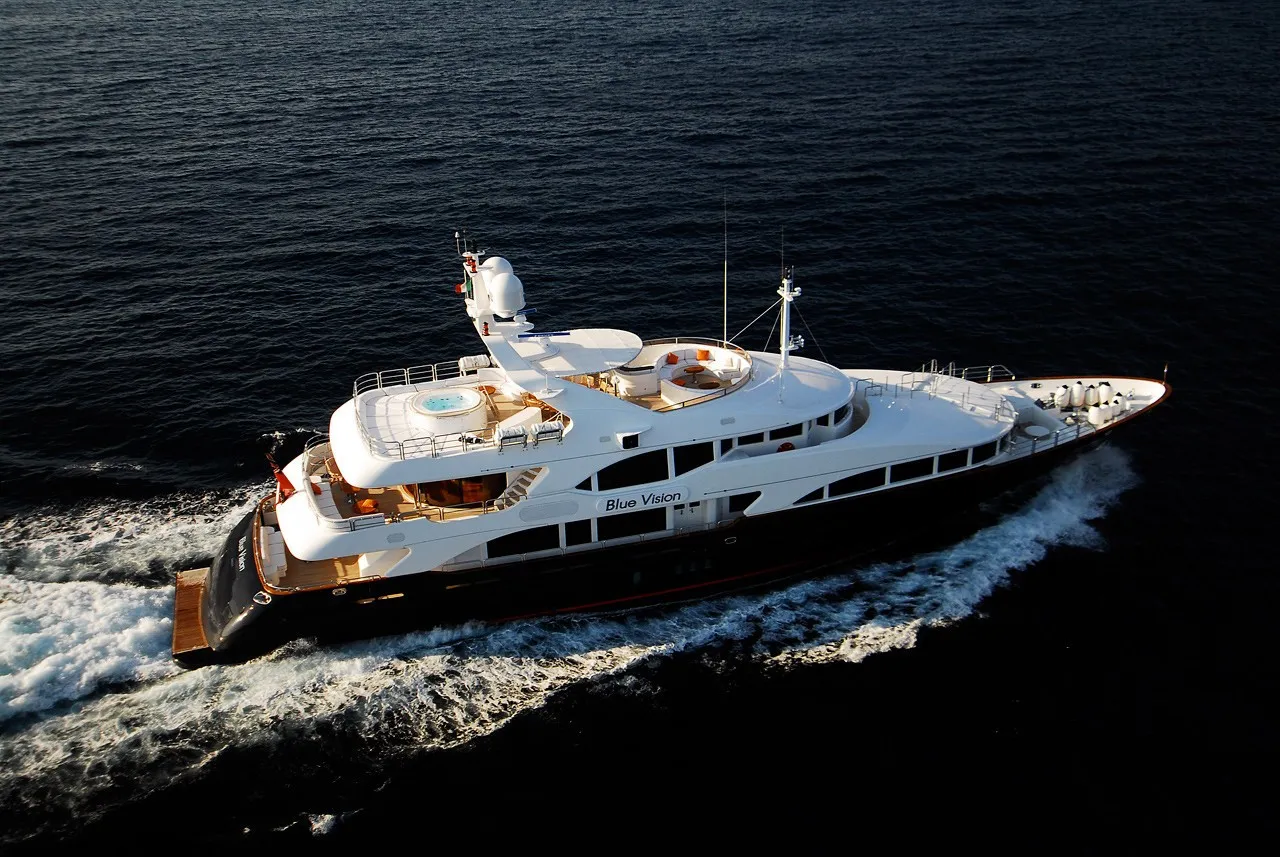
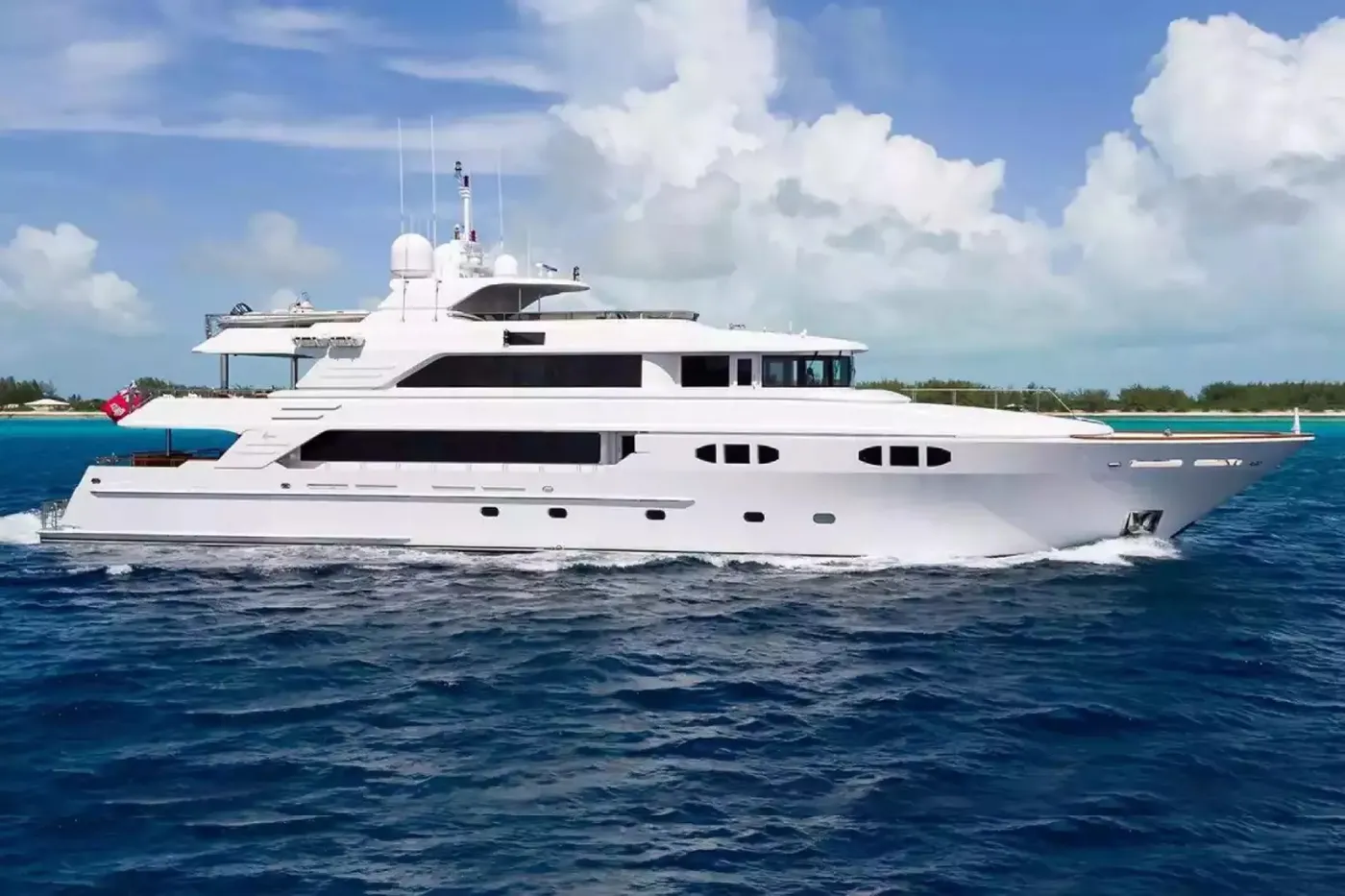
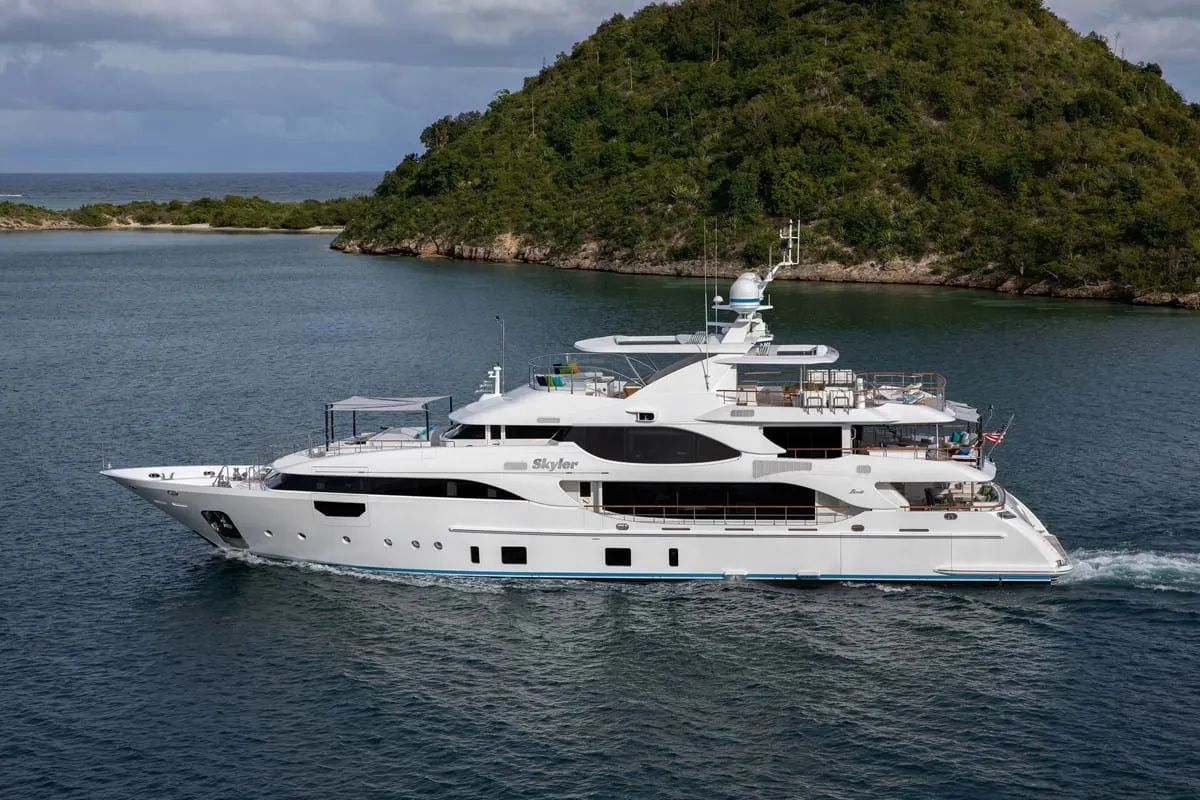
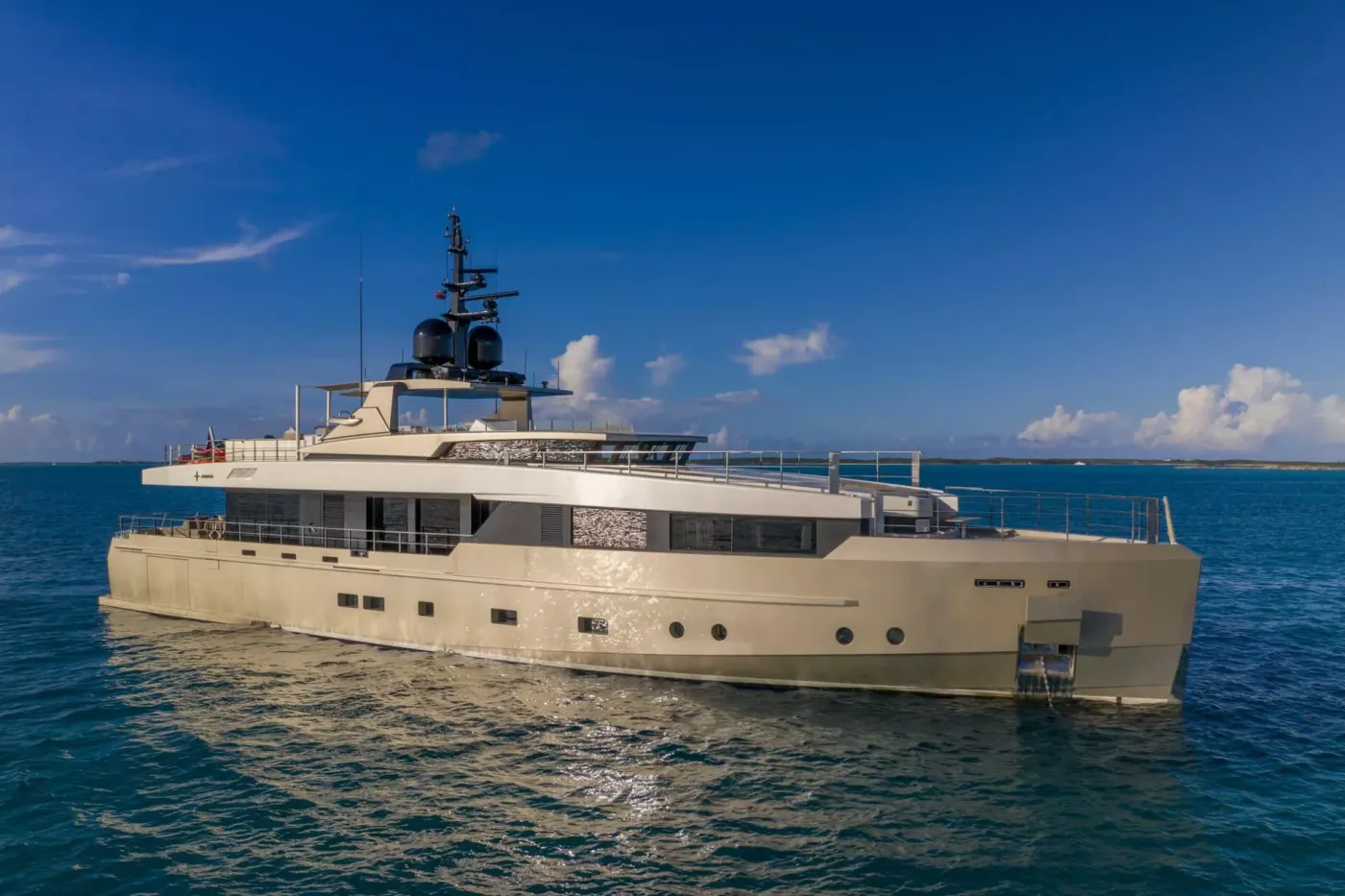
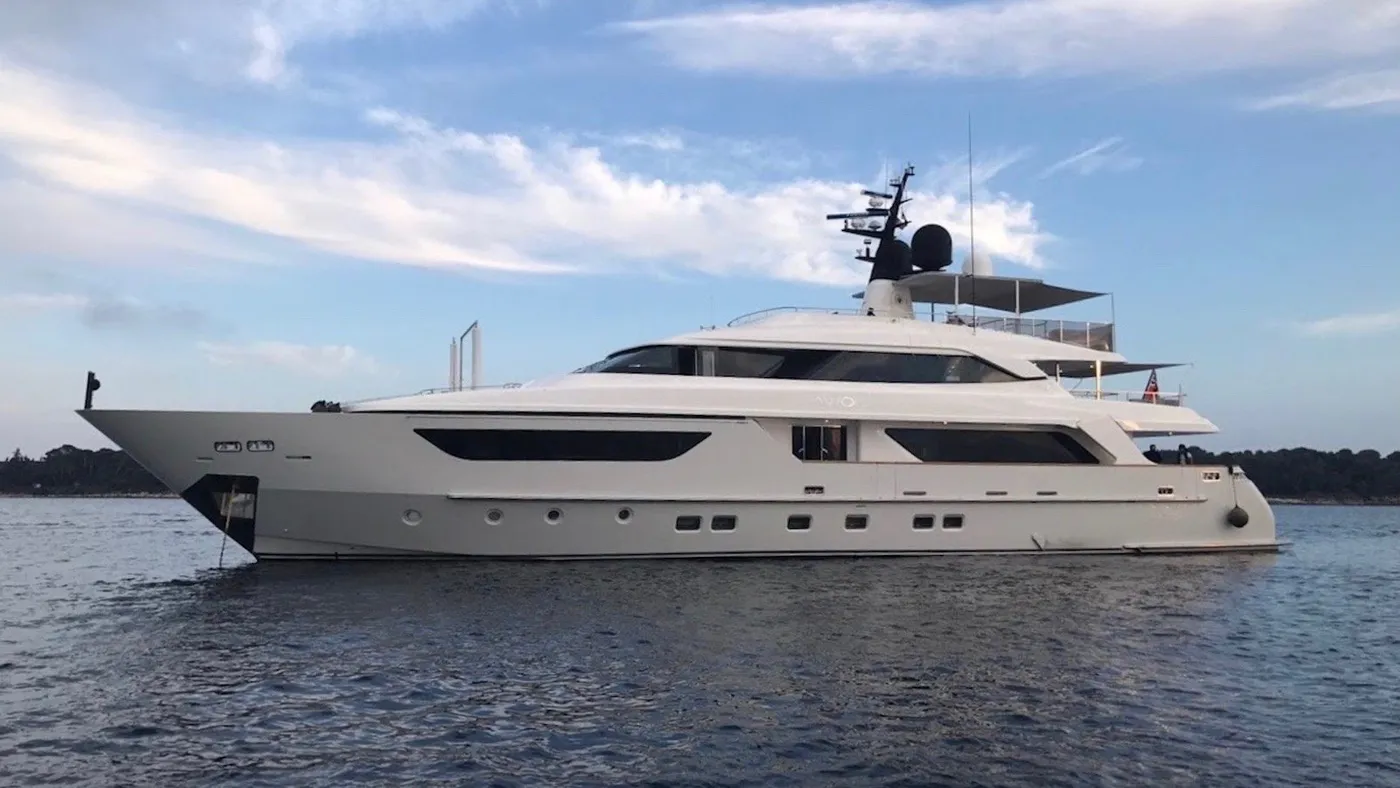
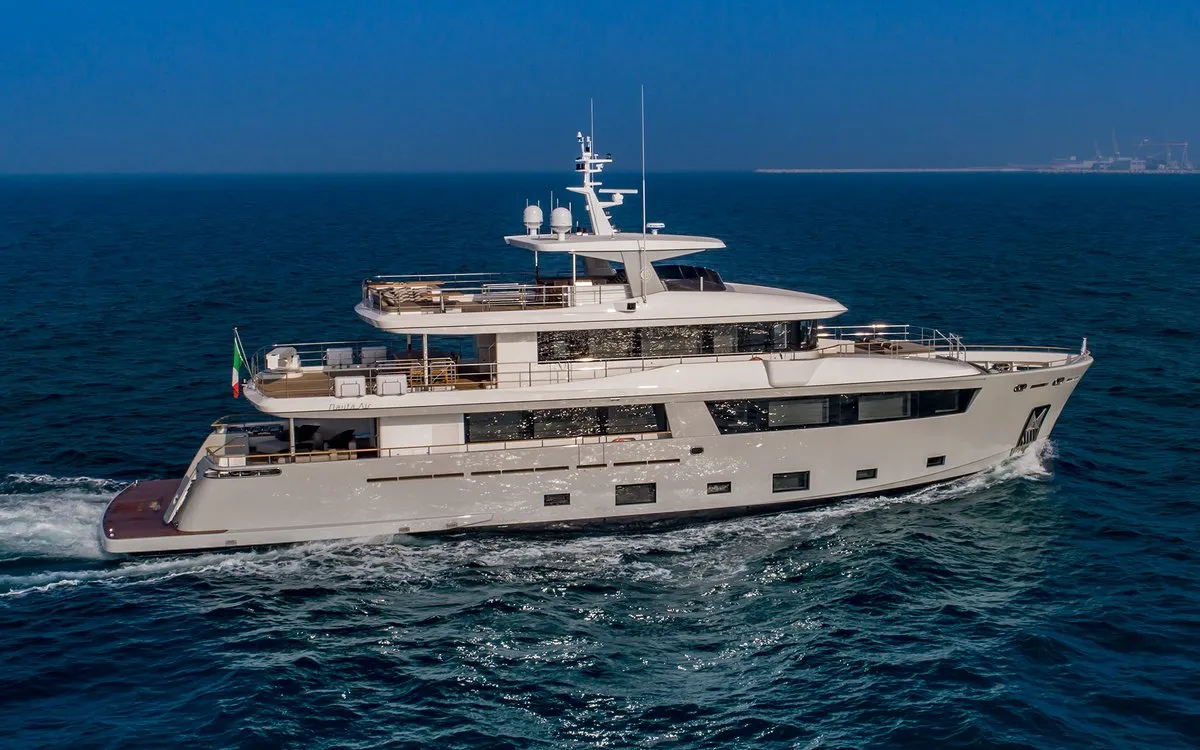
- Motor yachts of 25-40 m cover the hops quickly and carry larger toys. Ask for the draught in metres and how often the captain has run the Exumas.
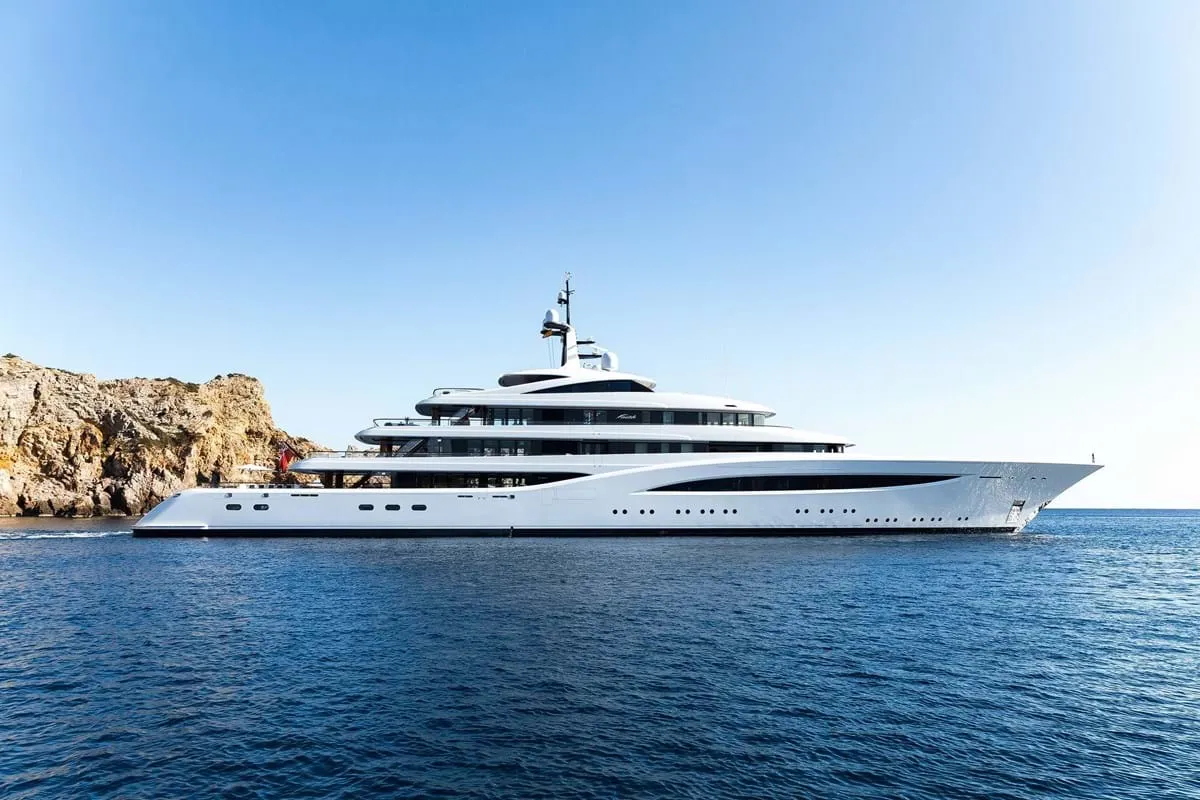
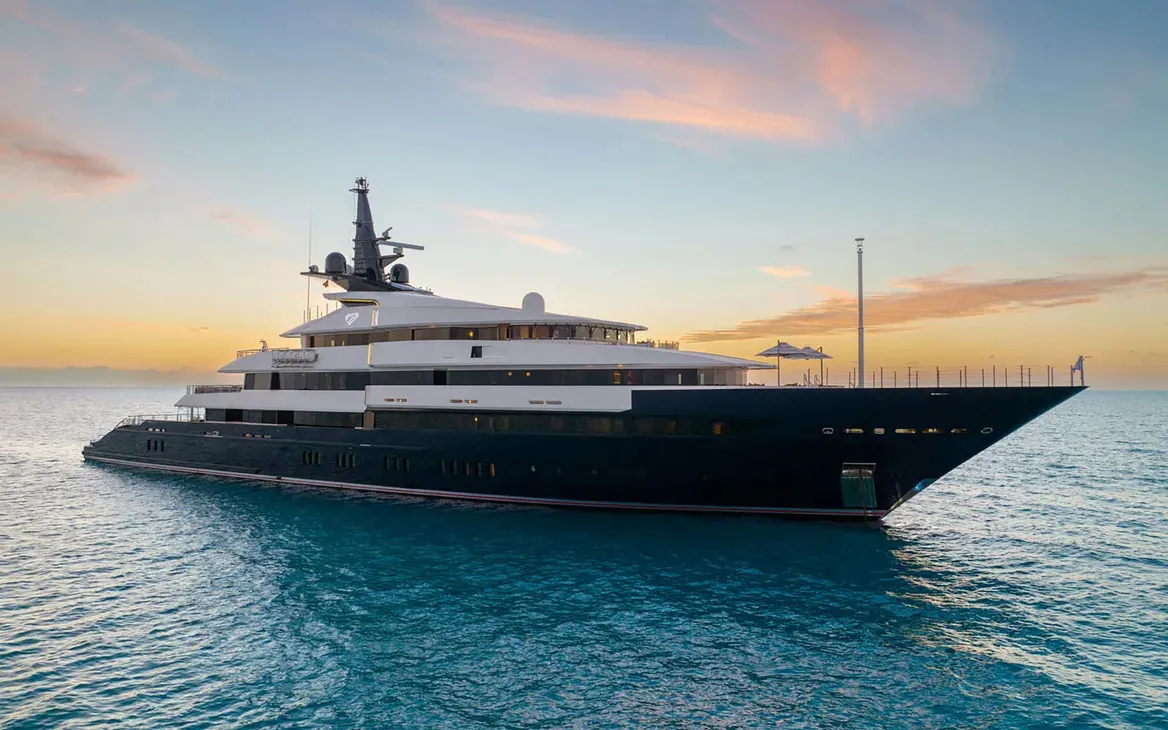
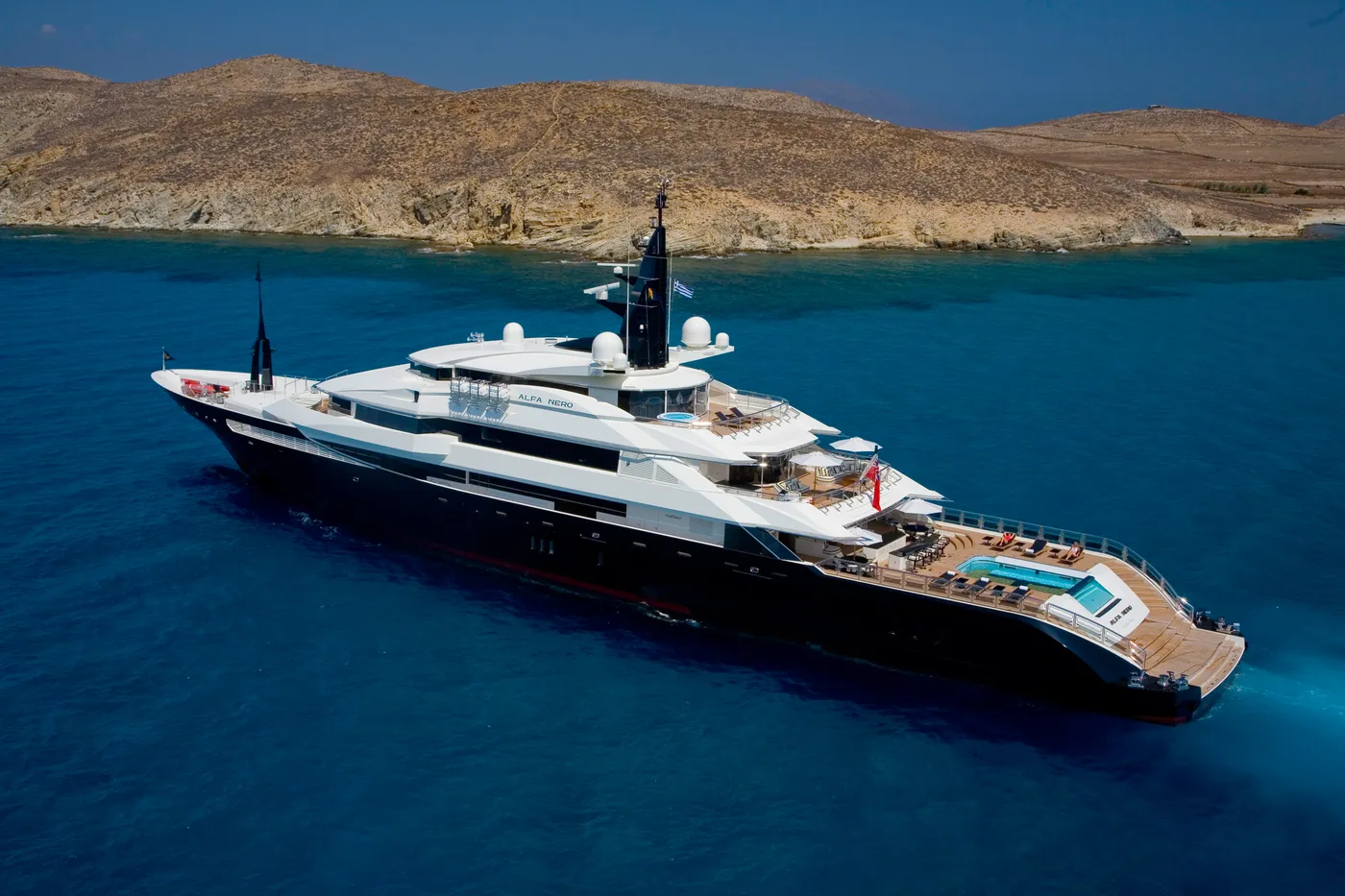
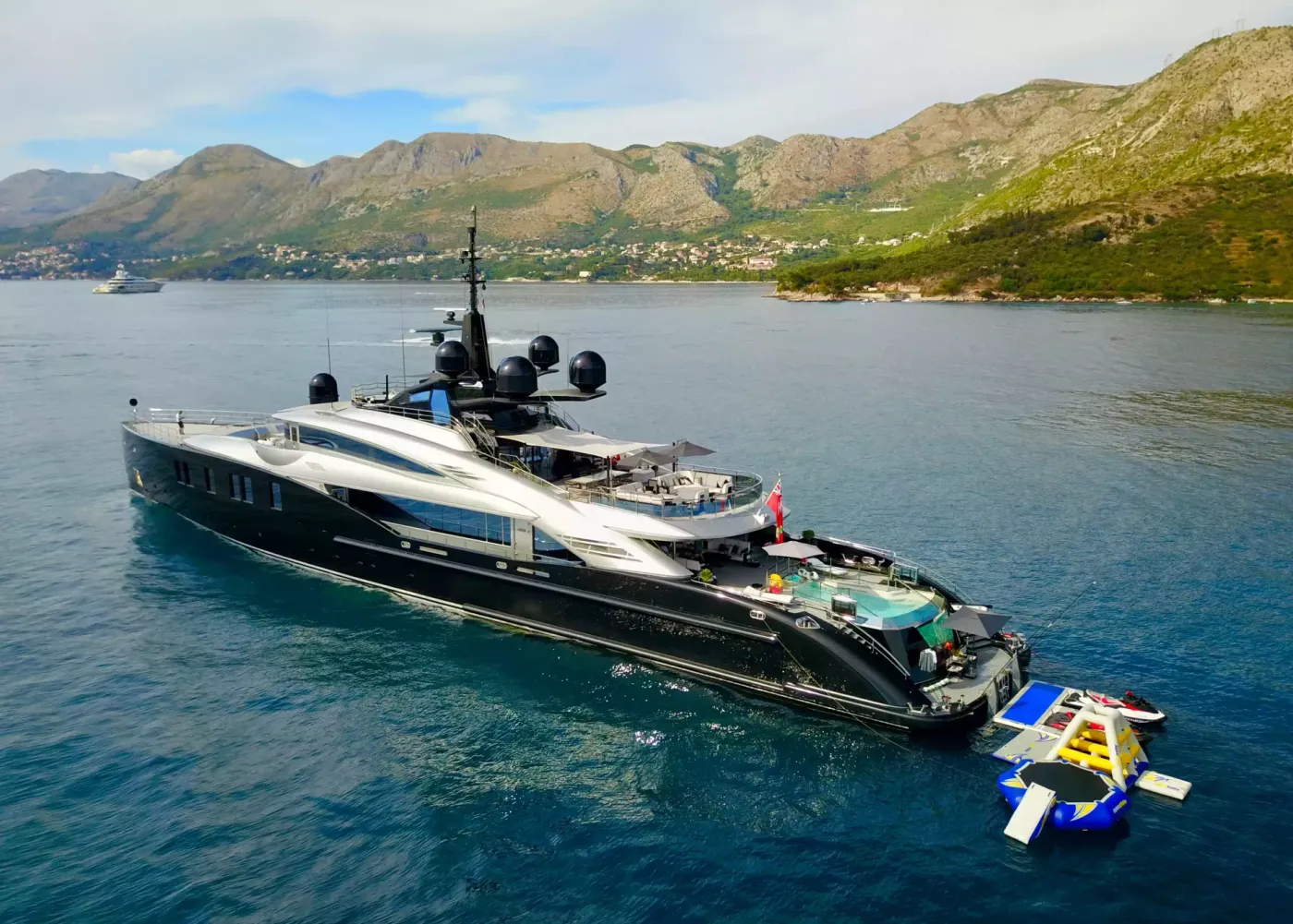
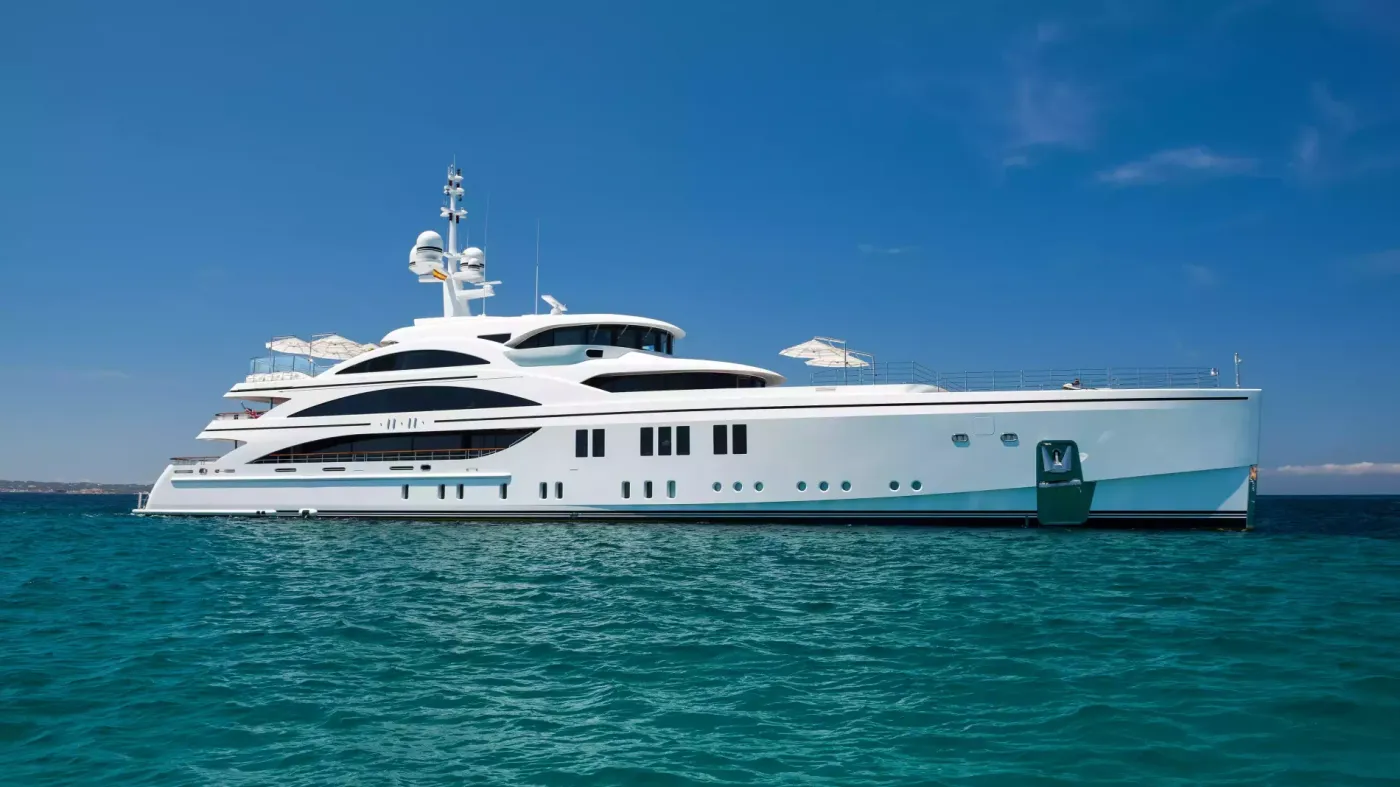
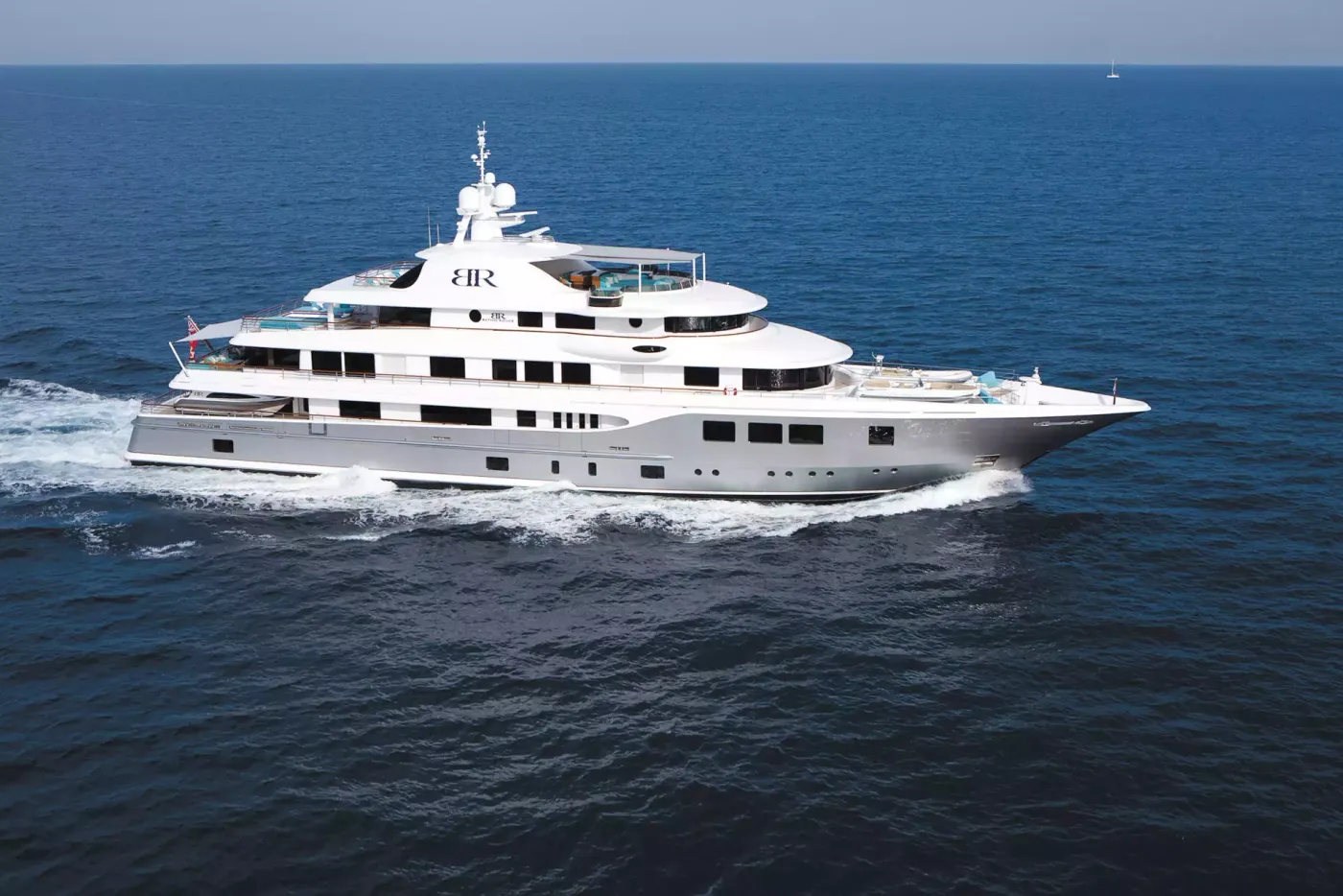
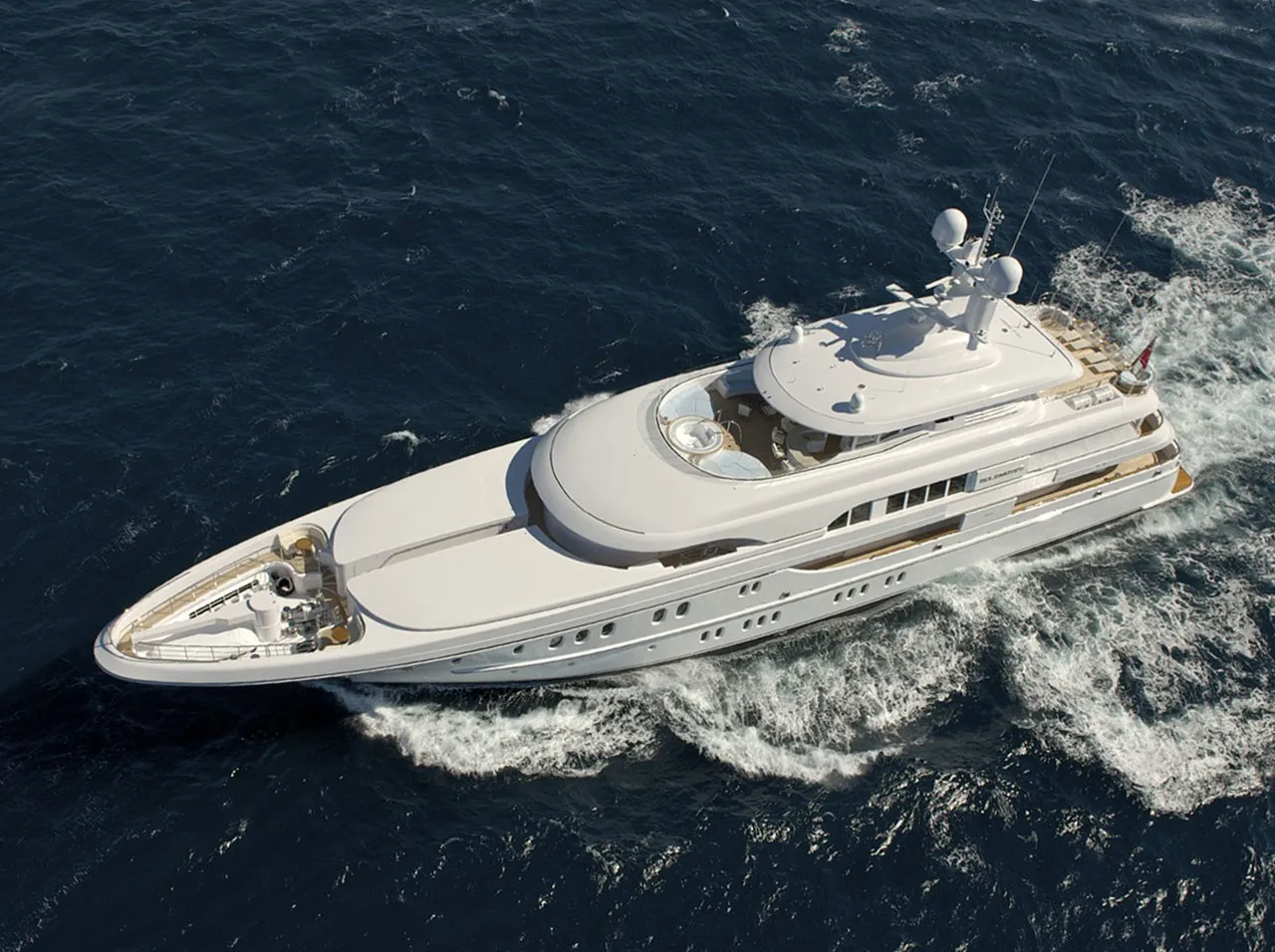
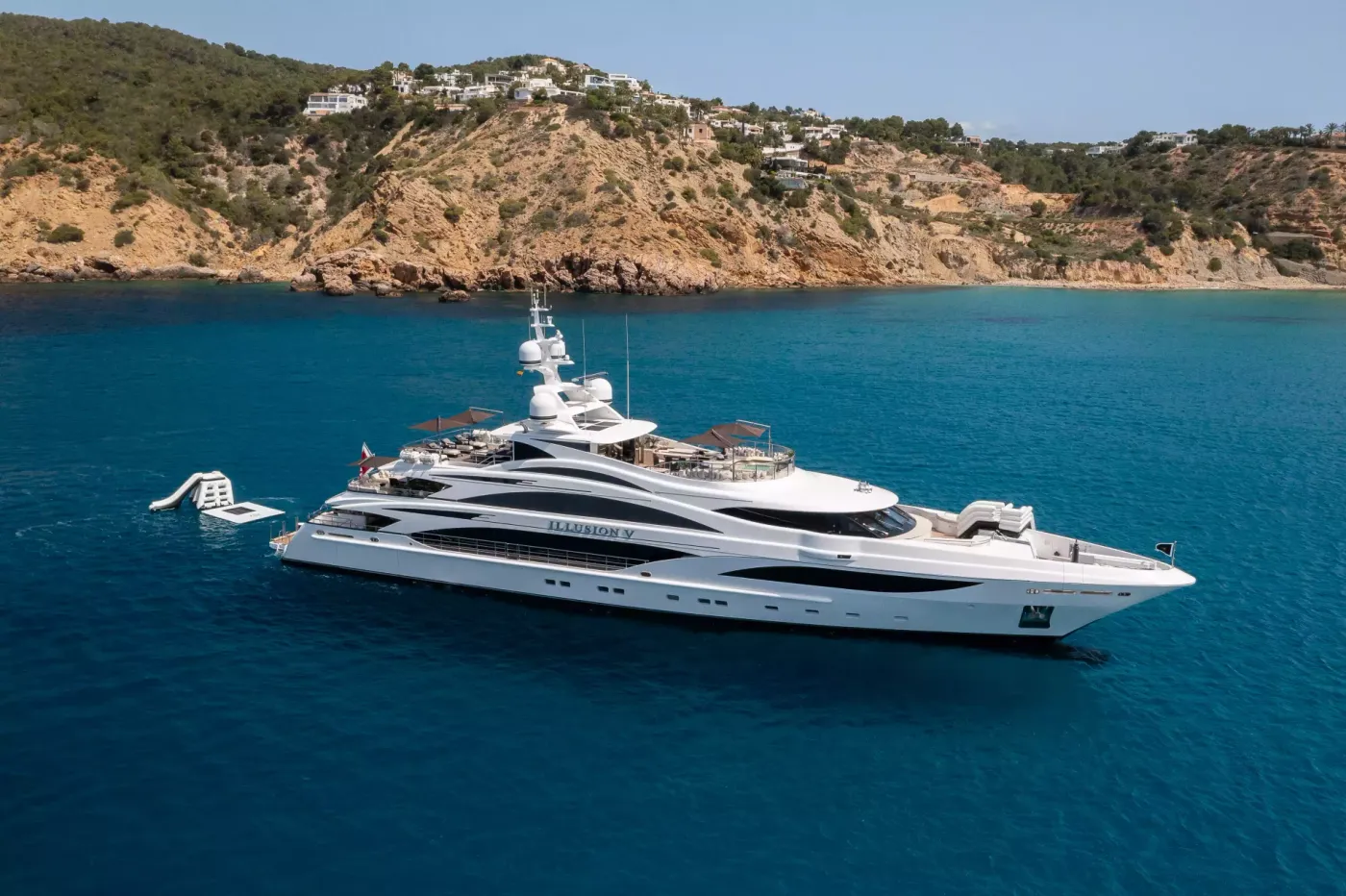
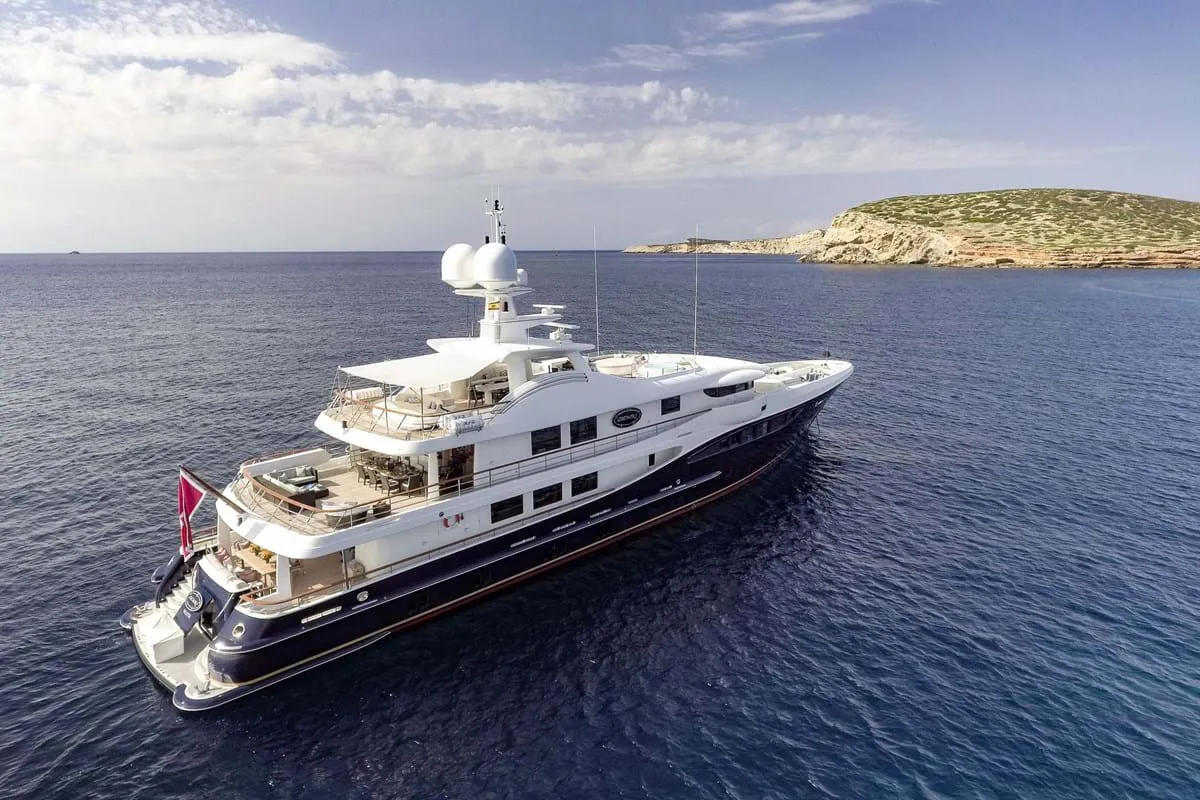
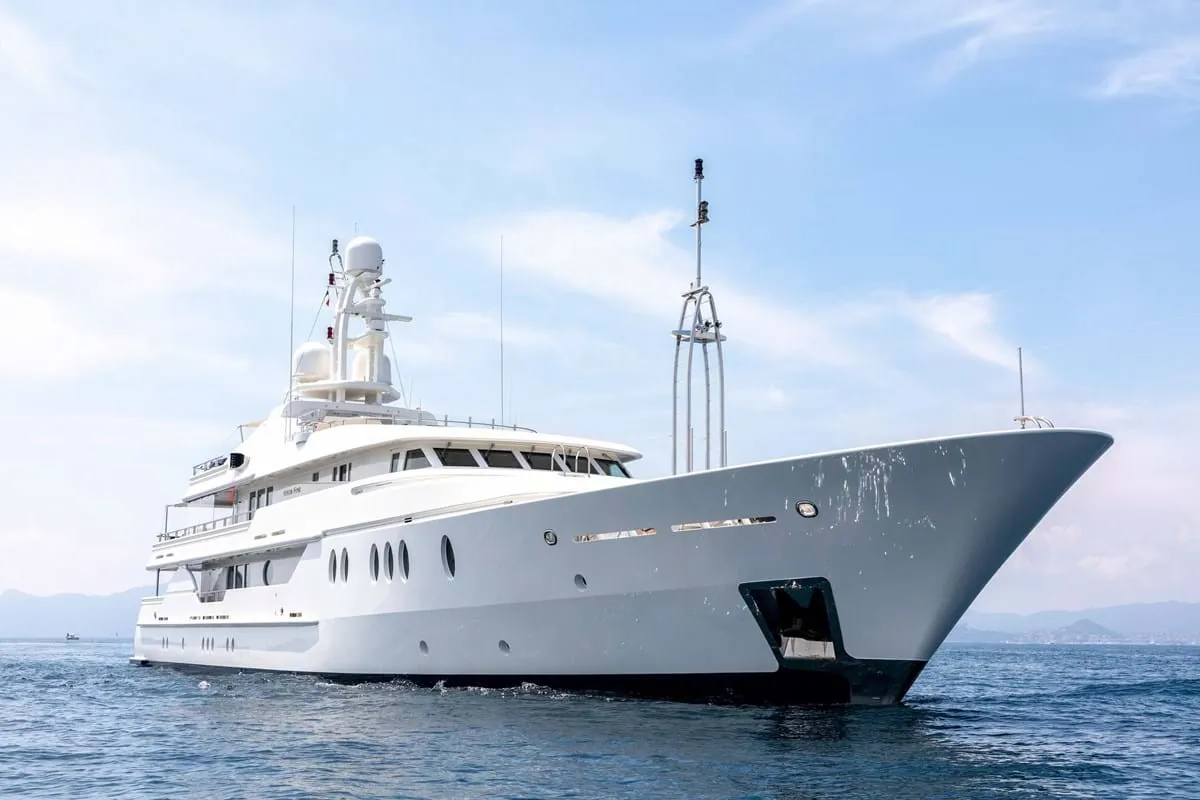
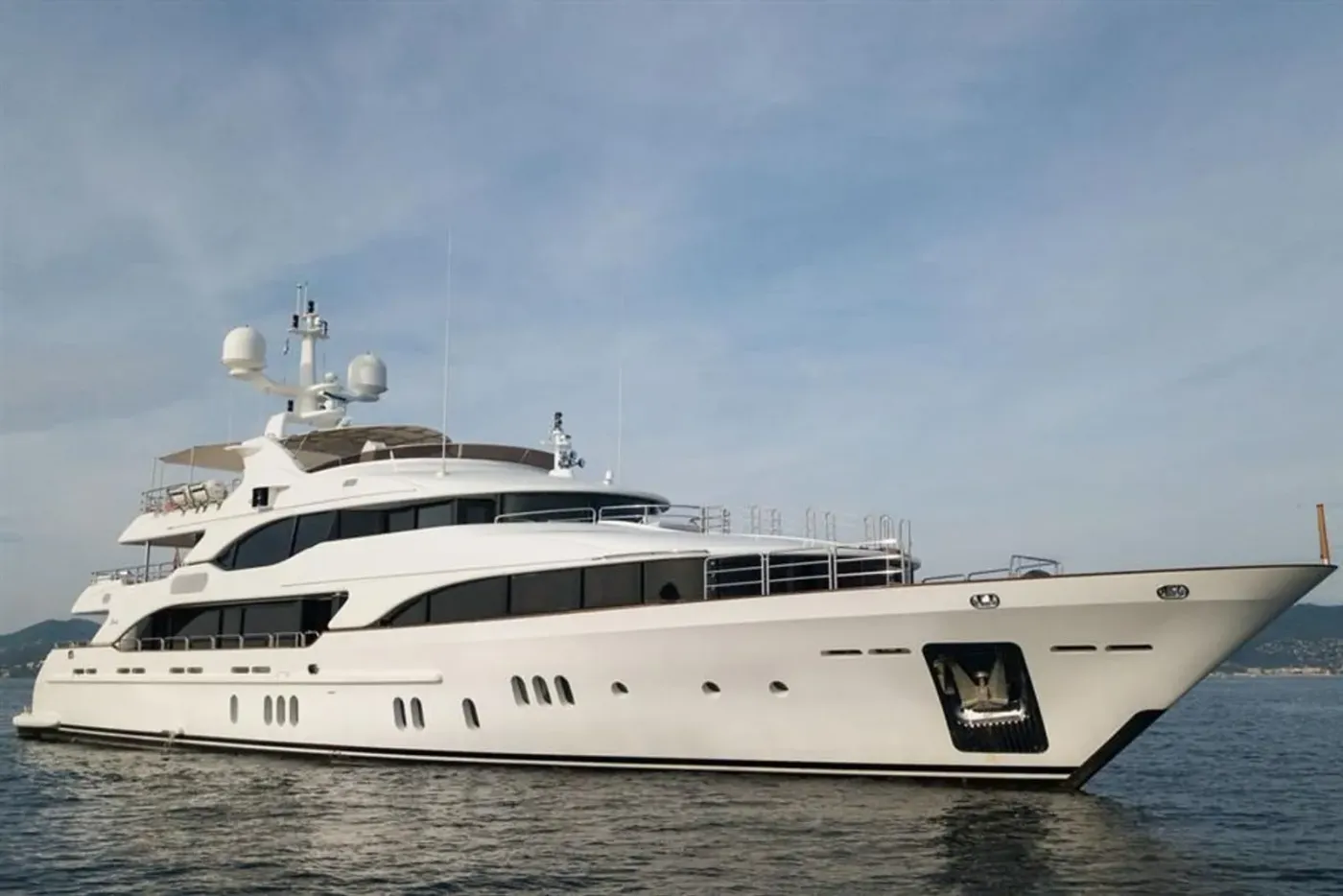
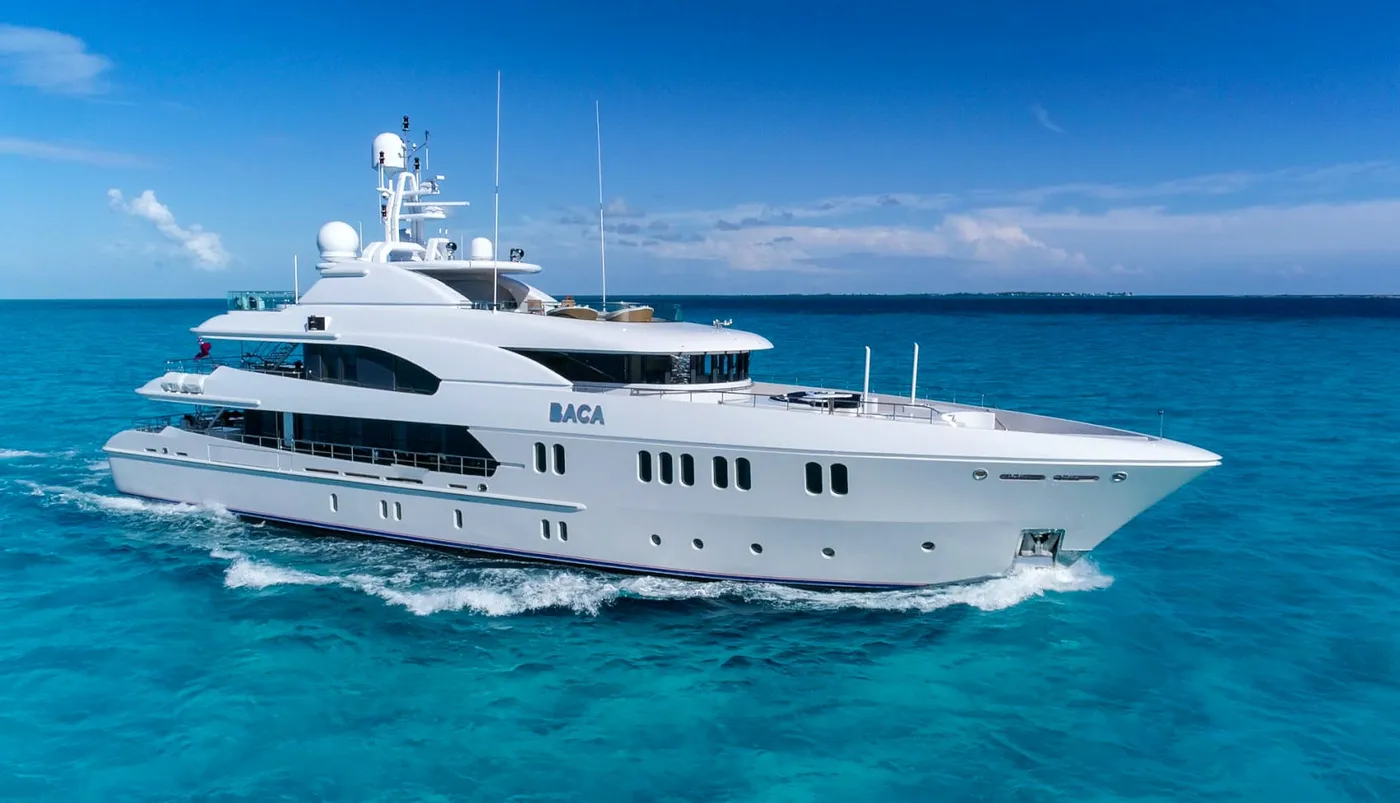
- Larger superyachts cruise the Exumas too, but they anchor in deeper water and do more of the exploring by tender. Remember that the park’s mooring scale stops at 150 feet (about 46 m).
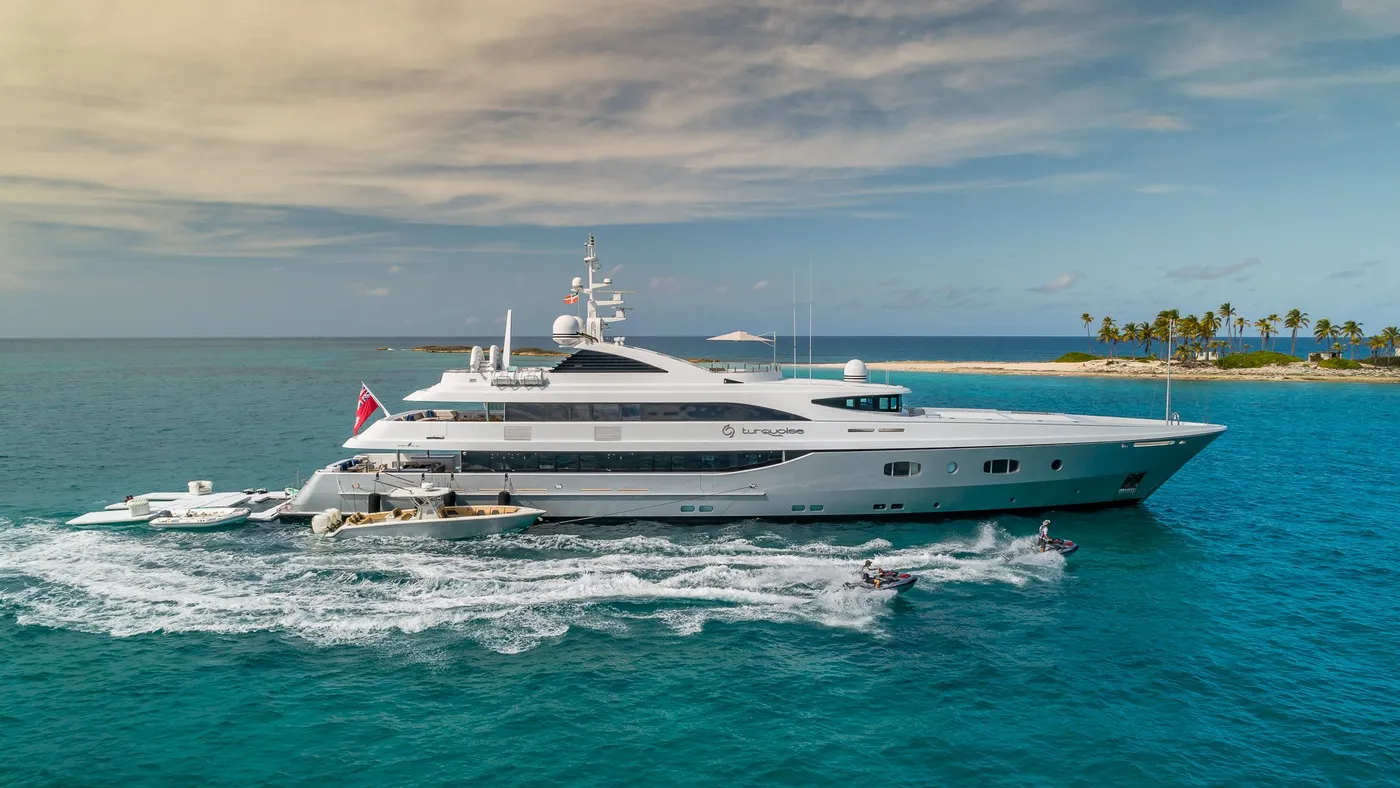
- The tender matters more here than almost anywhere: creeks, sandbars, Thunderball Grotto and Big Major Cay are all reached by tender. A fast, stable tender, kayaks and paddleboards make the week.
How much does a week’s charter in the Bahamas cost?
From about $20,000 a week for a small crewed catamaran to several hundred thousand dollars or euros for a 60-70 m superyacht, before tax and expenses. These are published weekly rates for specific yachts, consulted in November 2026, in the currency each is advertised in:
| Yacht type and size | Published weekly rates (examples) | Source |
|---|---|---|
| Crewed catamaran, 14 m | $19,700 to $22,700; $23,600 to $26,600 | Boatbookings |
| Crewed catamaran, 18 m | $48,000 to $52,000 | Boatbookings |
| Crewed catamaran, 24 m | $87,000 to $100,000 | Boatbookings |
| Motor yacht, President 87 (26 m), 8 guests | $40,000 (low season) to $45,000 (high season) | Boatbookings |
| Motor yacht, Sunseeker 95 (28 m), 8 guests | $69,000 to $75,000 | Boatbookings |
| Motor yacht, Delta 124 (about 38 m), 8 guests | $70,000 to $80,500 | Boatbookings |
| Superyacht, 44-47 m | from $112,000 (47 m) and $135,000 (44 m) | Camper & Nicholsons |
| Superyacht, 57-67 m | from €390,000 (57 m) to $680,000 (67 m) | Camper & Nicholsons |
The final price is the one the agency gives for a particular yacht and dates. On top of the base rate:
- The 14% charter tax, unless the quote says it is included.
- APA, the advance for fuel, food, drink, marinas and park fees, accounted for in full and refunded if not spent. Our APA guide explains how it works.
- Exuma Park fees: mooring by length plus $14 per person per day, with VAT.
- Crew gratuity. IYC puts the usual tip on Caribbean and US charters at around 15-20%, against 10-15% in the Mediterranean. It is voluntary. See our crew tipping guide.
- Delivery fees if the yacht has to move to your starting point.
For a full worked example, see how much a luxury yacht charter costs.
Eleuthera, Harbour Island and the Abacos
Eleuthera and Harbour Island
Eleuthera lies 60 miles east of Nassau and, according to the tourism ministry, has 210 miles of coastline and three airports: North Eleuthera, Governor’s Harbour and Rock Sound. Harbour Island, off its northern tip, was once the capital of the Bahamas and can only be reached by boat or ferry; its Pink Sands Beach is the famous one, but the ministry says pink sand covers more than 35 miles of mainland Eleuthera too. Spanish Wells, on St George’s Cay, is a working fishing town a short hop away. A week here suits guests who want beaches and an evening ashore in a village more than a string of empty cays.
The Abacos
The Abacos spread over 120 miles of cays in the north of the country, with Marsh Harbour’s Leonard M. Thompson International Airport as the gateway. Elbow Cay and Hope Town, with the Elbow Reef lighthouse, Great Guana Cay and its five-mile beach, Man-O-War Cay and its boat-building tradition, and Green Turtle Cay with the colonial settlement of New Plymouth are all within easy reach of each other. It is the area for guests who want to sail and to stop in a different settlement every evening.
Practical points before you go
How do you get there?
Many yachts are based in Nassau, where the Lynden Pindling International Airport is the country’s main gateway. The tourism ministry says flights from the US east coast can take as little as an hour. For a week ending in the southern Exumas, there is Exuma International Airport on Great Exuma, and Staniel Cay can be reached by air through its own airport. Confirm where the yacht is based and where the week ends before booking flights.
Crossing from Florida: customs both ways
The tourism ministry puts the Bahamas 50 nautical miles from Florida’s coast, so a yacht based in Florida can start the week there and cross. On arrival, the yacht must clear customs and immigration at the nearest designated port of entry, flying the yellow quarantine flag, and only the captain may go ashore until the yacht has been cleared.
Coming back, the US side applies. CBP ROAM is a free app that lets pleasure boaters report their arrival in the United States, but it does not cover travellers who need an I-94 or who must pay duty on goods, and they report in person. Guests who are not US citizens should check their US entry requirements before planning a crossing. The captain handles the paperwork; your passport has to be on board.
Money, tips ashore and phones
The Bahamian dollar is held at par with the US dollar and both are accepted on every island; carry cash for the Out Islands, where cards are less common. Ashore, the tourism ministry says waiters and taxi drivers usually receive 15%, and that many establishments already include the gratuity in the bill.
Common mistakes to avoid
- Comparing quotes without the 14%. Check whether each quote includes the charter tax.
- Choosing the yacht by length alone. In the Exumas, draught and tender count for more.
- Planning Warderick Wells as a fixed night. Moorings there are assigned by radio on the day; the captain needs a plan B.
- Feeding the wildlife. The Allen Cays iguanas are critically endangered, and Exuma Park is a no-take zone.
- Ignoring the storm clause for summer dates. Between June and November, read how the contract deals with a named storm before you sign.
For the wider region, from the British Virgin Islands to St Barths, Antigua and the Grenadines, see our Caribbean destination page.
Have Bahamas dates in mind?
Tell us when you want to go, whether the dates fall in the summer months, how many of you there are and where you will be flying from, and whether the Exumas, Harbour Island or the Abacos appeal. Say too whether a crewed catamaran is an option, as it often is here. A charter specialist will reply with yacht options and their full price, with APA, the 14% charter tax and park fees included. The charter is signed with the yacht’s owner through a licensed charter agency, with the full price and the tax clear before you sign. Send us your dates.