In this guide
- How many guests can a charter yacht take?
- How big a yacht do you need?
- Motor yacht, sailing yacht or catamaran?
- How many crew come with a charter yacht?
- Is fuel included in a yacht charter?
- Which stabilisers work at anchor?
- Outdoor space and the swim platform
- Tender and water toys
- Does the age of the yacht matter?
- Budget: compare totals, not base rates
- Which yacht suits your group?
- Where is the yacht based that season?
- A checklist before you shortlist
- Getting a shortlist that fits
The order matters more than any single feature: how many people sleep on board, where you want to cruise, how you like to spend the day, how much service you expect, and what you can spend once the extras are added. Two things catch first-timers out. A yacht that sleeps 16 may still be limited to 12 guests on charter, and two yachts at the same weekly rate can end up very differently priced once APA, VAT and the tip are added.
This guide is written for people planning a week on a crewed motor yacht, sailing yacht or catamaran of roughly 20 to 80 metres, often for the first time.
How many guests can a charter yacht take?
Up to 12 on most charter yachts, crew not counted, and most cruise with 8 to 12 depending on length; only yachts built to the passenger code, usually over 80 metres, can carry up to 36. Start there, because the guest list sets the floor.
Why can most charter yachts only take 12 guests?
Twelve is a regulatory threshold, not a marketing choice. A yacht of 24 metres or more in commercial use that carries no cargo and no more than 12 passengers can be certified under Part A of the Red Ensign Group (REG) Yacht Code, the successor of the old Large Yacht Code (LY3). Above 12 guests the yacht falls into Part B, the former Passenger Yacht Code, which covers 13 to 36 passengers and comes with tougher construction and safety standards. Meeting them can mean extra surveys, more crew or a refit, so many owners cap charters at 12.
Two consequences that surprise first-timers:
- Crew are not counted. The 12 is guests only; the crew comes on top.
- Beds do not equal licence. A large yacht may sleep 16 when the owner uses it privately but still be limited to 12 on a commercial charter. YachtCharterFleet gives the example of an 80-metre yacht with eight staterooms in exactly that situation.
Burgess notes that most charter yachts cruise with 8 to 12 guests depending on length, and that yachts built to the passenger code, usually over 80 metres, can carry up to 36. If your group is 14, you are looking at a yacht licensed for more than 12 or two yachts cruising together. YachtCharterFleet notes a fairly healthy selection of the former, but demand can be high, so tell the agency your numbers early.
For an event with the yacht staying in port, more people can come on board than the overnight guest limit, according to Burgess. That helps for a party in Monaco or Cannes, not for a week at sea.
Count cabins and beds, not just guests
Once you know the number, look at the cabin plan:
- Couples want doubles, ideally of similar size. On many yachts the master is much larger than the guest cabins. If two couples are paying equally, that matters.
- Children fit well in twin cabins, and some yachts have a Pullman (a fold-down upper berth). Check whether the Pullman is included in the yacht’s stated guest number; it usually suits a child, not an adult.
- Staff travelling with you (nanny, assistant, security) take guest places unless the yacht can list them otherwise: Bluewater suggests asking whether, on a yacht with extra staff accommodation, they can be listed as supernumeraries rather than guests. Include them from the start.
- Location of the master. A full-beam master on the main deck is quieter and has better views than one on the lower deck, near the engine room or the crew mess.
Ask for the general arrangement plan (the deck-by-deck drawing) rather than relying on photos. It shows where the cabins sit and how far they are from noise.
How big a yacht do you need?
At 30 to 40 metres YachtBuyer estimates 6 to 10 crew, and Burgess notes that most charter yachts cruise with 8 to 12 guests depending on length; whether there is a dedicated chef varies from yacht to yacht, so ask. Length drives almost everything else: space, crew, stability, speed, price and which harbours will take you. Our yacht size comparison has the full table by length band: the guest limit, YachtBuyer’s crew estimates and BOAT International’s average weekly rates. Treat those numbers as indicative: the actual figures are on each yacht’s specification sheet.
A few things that the numbers do not show:
- Bigger is not always better for your route. The same size comparison shows which harbours suit each size.
- Price climbs steeply with size. Burgess puts its minimum weekly rate at around €70,000 for its own fleet, while BOAT International’s 2022 average for yachts of 80 metres and over was around €1.7 million a week. For what goes on top of that, read what a luxury yacht charter really costs.
Motor yacht, sailing yacht or catamaran?
Choose a motor yacht to move quickly between islands, a sailing yacht if the sailing is the point of the trip, and a catamaran for stability at anchor and wide decks:
- Motor yachts suit groups who want to move between islands quickly and spend time on the water rather than travelling.
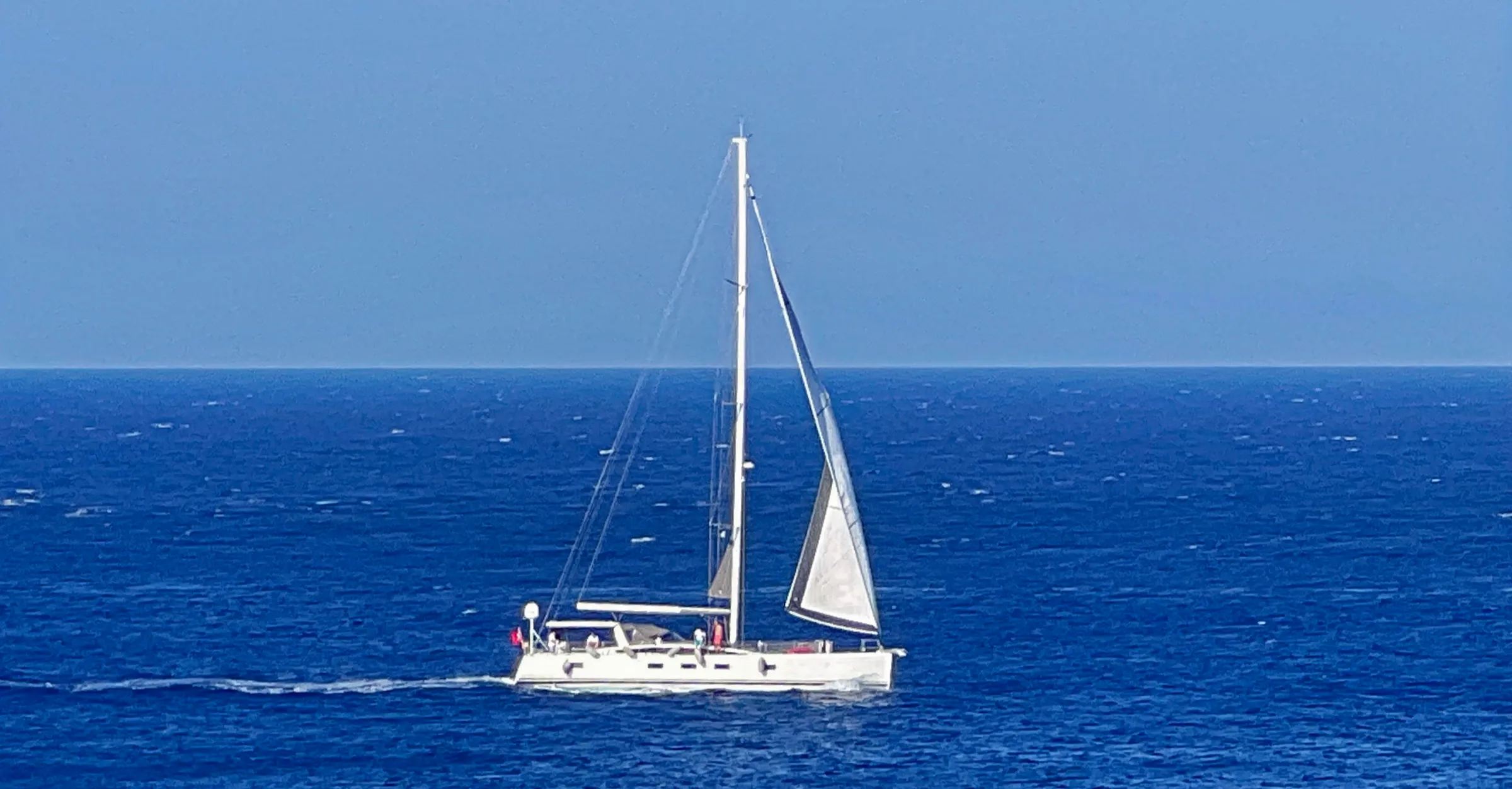
- Sailing yachts are slower and roll differently, but quieter under sail and, for people who like sailing, the point of the trip.
- Catamarans are stable at anchor, have wide decks and are popular for families.
We compare the three in detail in motor yacht vs sailing yacht vs catamaran.
How many crew come with a charter yacht?
About 5 on a 30-metre motor yacht, about 9 on a 50-metre yacht and about 25 on an 80-metre one, in YachtBuyer’s examples; YachtBuyer notes that a yacht in regular charter use may need more. The weekly rate covers the yacht and its crew; everything else is on you (Burgess). The crew is what turns a boat into a holiday, so look at it as closely as the interior.
Who is on board
This is how the crew grows with the yacht:
- 30-metre motor yacht, about 5 crew: captain, engineer, one steward or stewardess, two deckhands. YachtBuyer’s example has no dedicated chef, so ask who cooks.
- 50-metre yacht, about 9 crew: captain, chief engineer, second engineer, chef, chief stewardess, stewardess, three deckhands.
- 80-metre yacht, about 25 crew: captain and two officers, chief engineer plus three engineers, a chief stewardess and five interior crew, a head chef, sous chef and galley assistants, a purser, a bosun and six or more deckhands.
What to ask about the crew
- Is there a dedicated chef? On smaller yachts this is the single biggest difference in the week. Ask for sample menus and how they handle allergies and children.
- How long has the captain been on this yacht? A captain who knows the boat and the cruising area makes better decisions about anchorages and weather.
- Who drives the toys and the tender? On a smaller crew, a deckhand running the tender is not on deck. More crew means more of the day covered.
- Languages. If some guests do not speak English, ask.
Crew tips are on top of the rate. Our crew tipping guide explains the customary ranges.
Is fuel included in a yacht charter?
No, not in the base rate on most charters: it comes out of the advance provisioning allowance (APA), which Burgess puts at 20 to 40% of the charter fee in one answer and 30 to 40% of the weekly rate in another, and which also covers food, drink and port fees. So the route and the speed you choose show up in the APA.
Burgess notes that different yachts have different cruising capabilities in terms of speed, and the spec sheet gives cruising and maximum speed. Ask the agency for the yacht’s consumption at the cruising speed you will actually use, and plan the route around it. If the yacht has to sail empty to your start port, a repositioning fee may also apply.
Which stabilisers work at anchor?
Gyro stabilisers and fin stabilisers with a zero-speed mode; ordinary fins need forward speed. That matters for the hours at anchor (swimming, lunch, sleeping): with no water flowing past the hull, BOAT International explains, stabilisation becomes more of a challenge.
BOAT International explains the options:
- Fin stabilisers are the classic option; a marine engineering professor quoted by BOAT International says stabilisation is seen as a standard fit on most modern motor yachts above 25 metres. Fins work well underway but need water flowing over them, so at anchor they help only in zero-speed mode, which BOAT International says most manufacturers now offer; check it is fitted.
- Gyro stabilisers use a flywheel spinning at up to 17,000 rpm and work without forward speed. They are very effective at anchor and nearly silent, less so underway. Many builders fit both fins and gyros.
- Modern systems can remove a large share of the rolling motion; BOAT International cites up to 90%, without test data behind the figure.
Sailing yachts are much less likely to have stabilisers; their keel and rig damp roll differently. If anyone in your group is prone to seasickness, “zero-speed stabilisers” or “gyros” on the spec sheet is worth paying for.
Outdoor space and the swim platform
A wide, low swim platform and a shaded sundeck matter most, because you will spend most of the week outside. Compare:
- Swim platform and beach club. A wide, low platform at water level makes swimming easy for children and older guests. Ask whether there is a beach club (a lounge opening onto the platform) or just a step down to the water.
- Sundeck shade. Ask whether the sundeck has a bimini or hardtop for shade.
- Dining outside. Check that the aft deck table seats the whole group at once.
- Jacuzzi. Ask whether it can be used underway.
Tender and water toys
The tender is the yacht’s car: it takes you ashore, to restaurants and to beaches the yacht cannot reach, and lets you skip berthing in busy harbours. It also tows inflatables. Ask how many guests it seats and whether there is a second tender.
Toys vary from yacht to yacht and newer yachts carry more, so the list is worth checking line by line. Typical items include jet skis, seabobs, kayaks, wakeboards, inflatable slides and towables, and sometimes diving equipment. Some extras, such as rendezvous diving, are charged separately.
Jet skis in particular come with local rules and licence requirements that vary by country. Our water toys guide goes through what to ask for and the rules in each main cruising area.
Does the age of the yacht matter?
Less than when it was last refitted and how it has been kept. A ten-year-old yacht with a recent interior refit and new soft furnishings can feel newer than a five-year-old yacht that has been chartered hard. Ask:
- The year of the last refit and what it covered (interior, engines, technology, paint).
- Whether Wi-Fi is fit for your use. Burgess notes Wi-Fi is standard on most yachts but not guaranteed, and upgrades for heavy use cost extra.
- Photos taken recently, not at launch.
Budget: compare totals, not base rates
Add APA, VAT, the tip and any delivery fee before you compare, because two yachts at the same weekly rate can end up very differently priced:
- APA: 20 to 40% of the charter fee according to Burgess (30 to 40% of the weekly rate in another of its answers), depending on yacht size, destination and charter length.
- VAT: depends on where the charter starts and cruises. Our guide to charter VAT by country explains the rules.
- Tip: customarily 10 to 15% of the charter fee in Burgess’s guidance.
- Delivery or repositioning fees if the yacht starts away from its base.
- Days: charters over seven days are pro-rated (weekly rate ÷ 7 × days); most yachts will not take less than a week, and those that do usually charge a premium (weekly rate ÷ 6 × days), per Burgess.
The final price is always the one the licensed agency puts in the contract, which is usually the MYBA agreement. Read the contract carefully before signing; our guide to the MYBA agreement explains each clause.
Which yacht suits your group?
Families need a low swim platform and a crew used to children, groups of friends need cabins of similar size and plenty of outdoor space, and companies first need to know whether the plan is a cruise or an event in port. The same 40-metre yacht can be perfect for one group and wrong for another:
Families with children
- A low, wide swim platform and a crew that is used to children matter more than a big saloon.
- Twin cabins near the parents, and ideally no cabin on a different deck from the master.
- Ask whether rail netting for small children is available; ask before you book, not on arrival.
- Toys that work for mixed ages: inflatable slides, towables behind the tender, paddleboards and snorkelling kit. Jet skis come with local rules and licence requirements that vary by country.
- A chef who will cook simple food for children at different times from the adults.
Groups of friends
- Cabins of similar size, so nobody feels they drew the short straw.
- Plenty of outdoor seating and a sundeck bar or a jacuzzi.
- A tender that seats the whole group for evenings ashore, or two tenders.
- A route with nights in or near a harbour if nightlife is part of the plan.
Corporate and events
- Check whether the plan is a cruise with up to 12 guests overnight or an event in port with more people on board; the rules differ, as explained above.
- Indoor space with a screen and reliable connectivity for a working session.
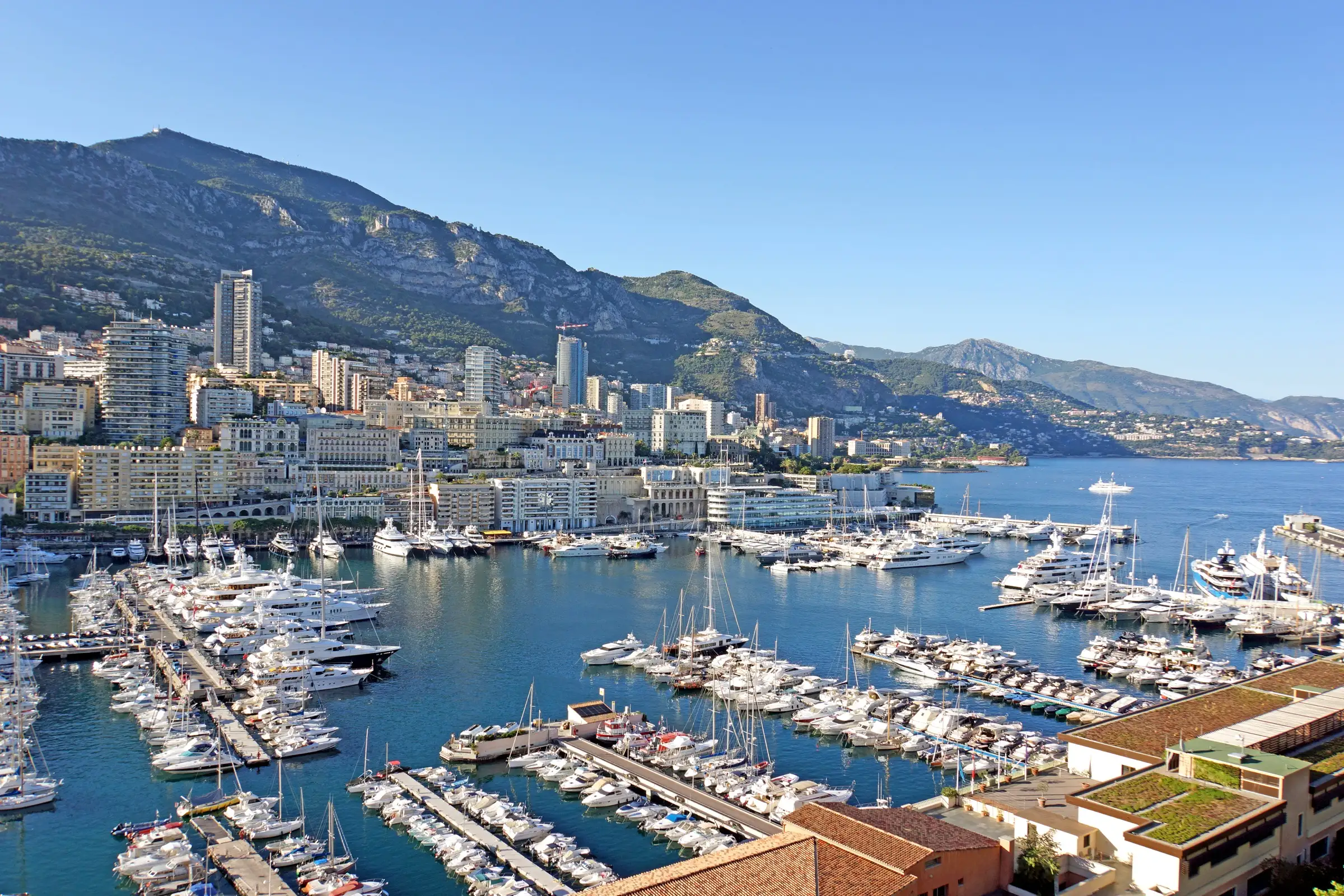
- For big events (Monaco Grand Prix, Cannes) the yacht’s ability to berth in the harbour matters more than its range.
Where is the yacht based that season?
Charter yachts follow the season. Burgess notes that most yachts spend summer in the Mediterranean and winter in the Caribbean and Bahamas. A yacht based in Palma, Antibes or Athens in July will not normally charge a delivery fee to start there; asking it to begin in a different country can add a delivery or repositioning fee for fuel and crew time.
So, before you fall for a yacht, check where it spends the season you want. Our guide on when to book a yacht charter covers timing and seasons in detail.
A checklist before you shortlist
| Question | Why it matters |
|---|---|
| How many guests sleep on board, including staff? | Sets the licence you need; 12 is the usual ceiling. |
| How are the cabins laid out? | Equal doubles for paying couples; twins for children. |
| Is there a dedicated chef? | The biggest service difference on smaller yachts. |
| Zero-speed stabilisers or gyros? | Comfort at anchor, where fins need a zero-speed mode. |
| Consumption at your cruising speed? | Fuel is paid from the APA. |
| Toy list and jet ski licence rules? | Toys vary by yacht; jet ski rules vary by country. |
| Year and scope of last refit? | A better guide to condition than build year. |
| Total price with APA, VAT and tip? | The only fair way to compare. |
Two related guides go further: chartering a yacht for more than 12 guests if your group does not fit the usual limit, and what to expect on board once you have chosen.
Getting a shortlist that fits
Send us the number of guests including any staff, how you would split the cabins, the region and dates, and the two or three things on the checklist that matter most to you, whether that is a dedicated chef, stabilisers at anchor or the toy list. A charter specialist will reply with yachts that fit. The charter is contracted with the yacht’s owner through a licensed charter agency, usually under the MYBA agreement, with the full price and VAT set out before you sign. Start your shortlist.